

How to Choose the Right Chain Sling for Your Needs


How to Choose the Right Chain Sling for Your Needs
Chain slings are essential lifting devices in various industries, including construction, manufacturing, and transportation. They are made of metal chain links and come in multiple types and sizes to accommodate different lifting applications.
When choosing a chain sling, there are several factors to consider, including:
- The weight and size of the load: The first step is to determine the weight and size of the load that the chain sling will be used to lift. The sling must be rated for the weight of the load, or it could fail and cause an accident.
- The type of object being lifted: The type of object being lifted also affects the type of chain sling that is required. For example, a chain sling with a smooth surface is best for lifting delicate objects, while a chain sling with a rough surface is better for lifting abrasive objects.
- The environment in which the sling will be used: The environment in which the sling will be used also affects the type of chain sling required. For example, a chain sling that is resistant to corrosion is needed if the sling is used in a humid or salty environment.
- The number of legs: on a chain sling refers to the chains used to support the load. A single-leg chain sling has one chain, a two-leg chain sling has two chains, and so on. The number of legs affects the sling's stability and the weight it can lift.
- The chain's grade: The chain's grade refers to its strength. The higher the grade, the stronger the chain. The grade of the chain must be appropriate for the weight of the load that the sling will be used to lift.
- The length of the sling: The length of the sling affects the reach of the sling and the way that the load can be lifted. The length of the sling must be appropriate for the lifting application.
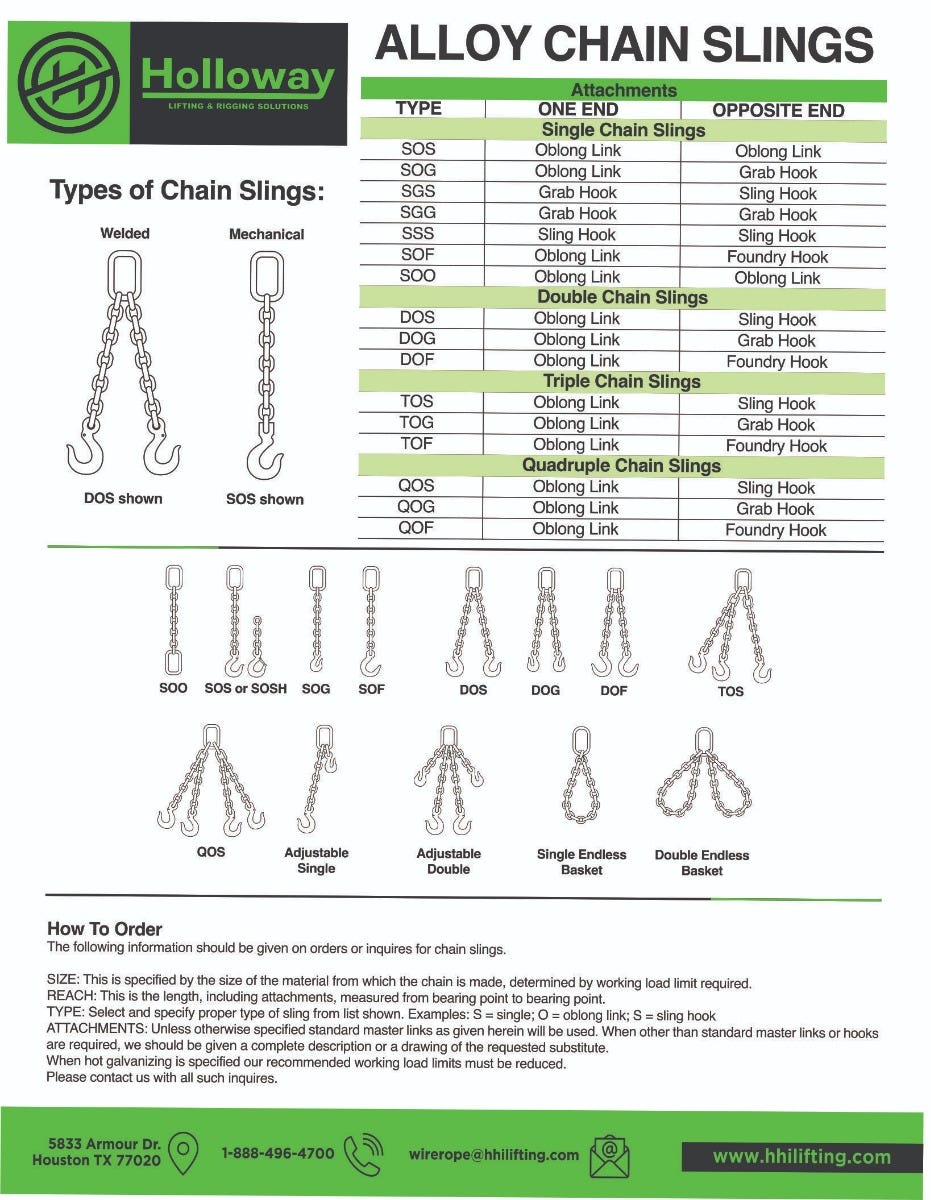
In addition to these factors, you should also consider the following when choosing a chain sling:
- The manufacturer: Choosing a chain sling from a reputable manufacturer is important. Reputable manufacturers use high-quality materials and adhere to strict safety standards.
- The warranty is essential: As it protects you if the sling fails. Make sure to choose a sling with a warranty covering the weight of the load you will be lifting.
Considering all these factors, you can choose the right chain sling for your needs and ensure the safety of your lifting operations.
Here are some additional tips for choosing a chain sling:
- Always read the manufacturer's instructions carefully before using a chain sling.
- Inspect the chain sling regularly for signs of wear and tear.
- Do not overload the chain sling.
- Use the correct lifting techniques.
- Train your employees on how to use chain slings safely.
By following these tips, you can help to ensure the safe use of chain slings in your workplace.
If you are looking for a reliable and durable wire rope sling, Contact Holloway Houston today. We offer various slings to meet your needs, and our satisfaction guarantee backs our products.

Types of Sheaves and Their Applications
April 18, 2020

Different Types of Hoists and Their Applications
March 7, 2023

Proof Load Testing and Why It is Required
April 22, 2021

Choosing the Right Lifting Sling: Round slings vs. Webbing Slings
February 26, 2024
Ratchet Straps: Your Guide to Securing Cargo and Equipment
December 3, 2023

Your One-Stop Shop for Rigging Equipment and Services
October 15, 2023
The Benefits of Using Forklift Fork Protection Sleeves
October 12, 2023