How to Choose the Right Synthetic Sling for Your Lifting Needs

How to Choose the Right Synthetic Sling for Your Lifting Needs

Every lift starts with a critical decision: which sling goes on the load? The answer depends on much more than just the gross weight of the object. Load geometry, surface condition, working temperature, exposure to caustic chemicals, and the specific rigging configuration all factor heavily into the equation. Choosing the wrong sling type can lead to severe capacity reductions, accelerated sling wear, or irreparable damage to the load itself.

This article explains the major lifting sling types used across heavy industry chain, wire rope, synthetic round, and synthetic web and walks through the specific engineering factors that experienced riggers and lift planners consider when choosing a lifting sling. It is intended as an educational overview and is not a substitute for formal lift planning or engineered rigging decisions.

Safety and Use: Use this as a starting point. Final sling selection should follow the tag, the manufacturer WLL chart, and your company's lift plan.

Shop lifting sling

Overview of Lifting Sling Types

ASME B30.9 (2021) addresses slings fabricated from alloy steel chain, wire rope, metal mesh, synthetic fiber rope, synthetic webbing, and polyester fiber yarns housed in a protective cover. In heavy commercial rigging, the four most common types of lifting slings deployed to the field are chain slings, wire rope slings, synthetic round slings, and synthetic web (flat) slings.

Each material brings a highly specific combination of tensile strength, flexibility, temperature tolerance, and load protection to the job site.

Chain Slings

Alloy steel chain slings are fabricated from heat-treated alloy chain, typically in Grade 80 or Grade 100 configurations per NACM (National Association of Chain Manufacturers) welded steel chain specifications.

Chain slings are recognized for their extreme durability in high-temperature and highly abrasive environments. They heavily resist cutting, are entirely repairable by replacing individual damaged components, and maintain their rated capacity across a much wider temperature range relative to synthetic alternatives.

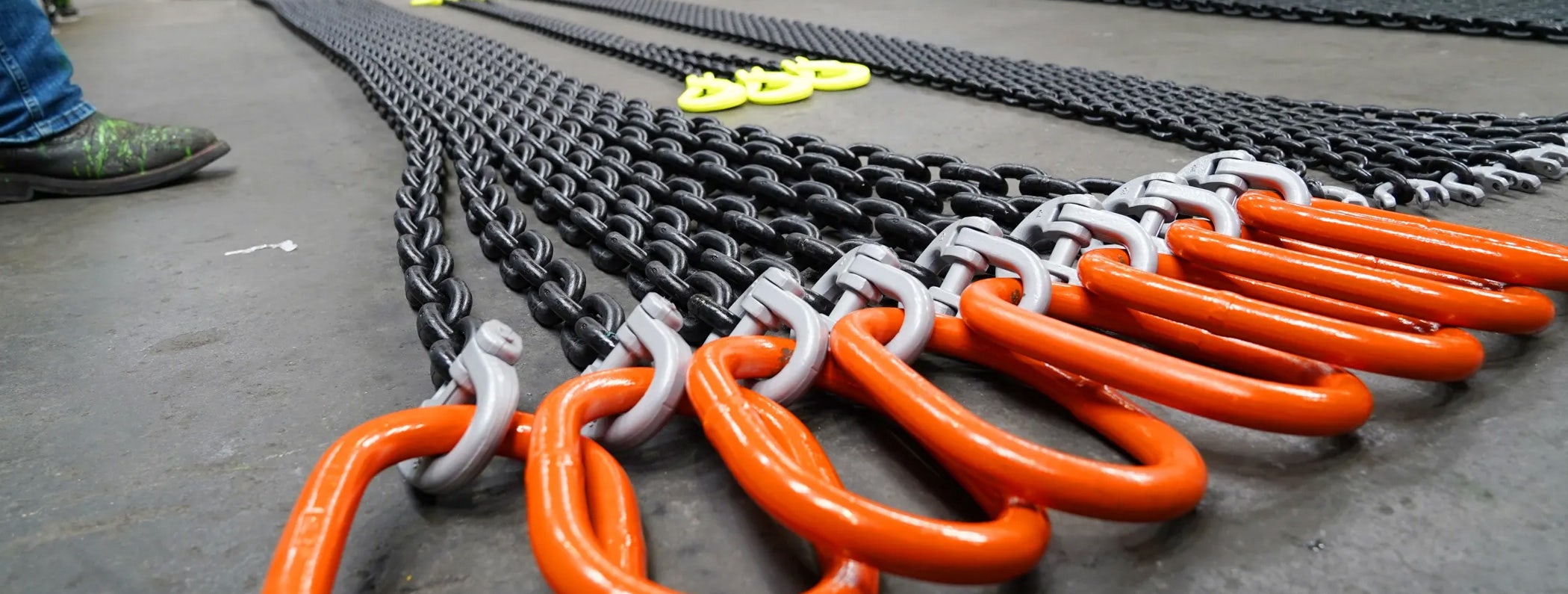
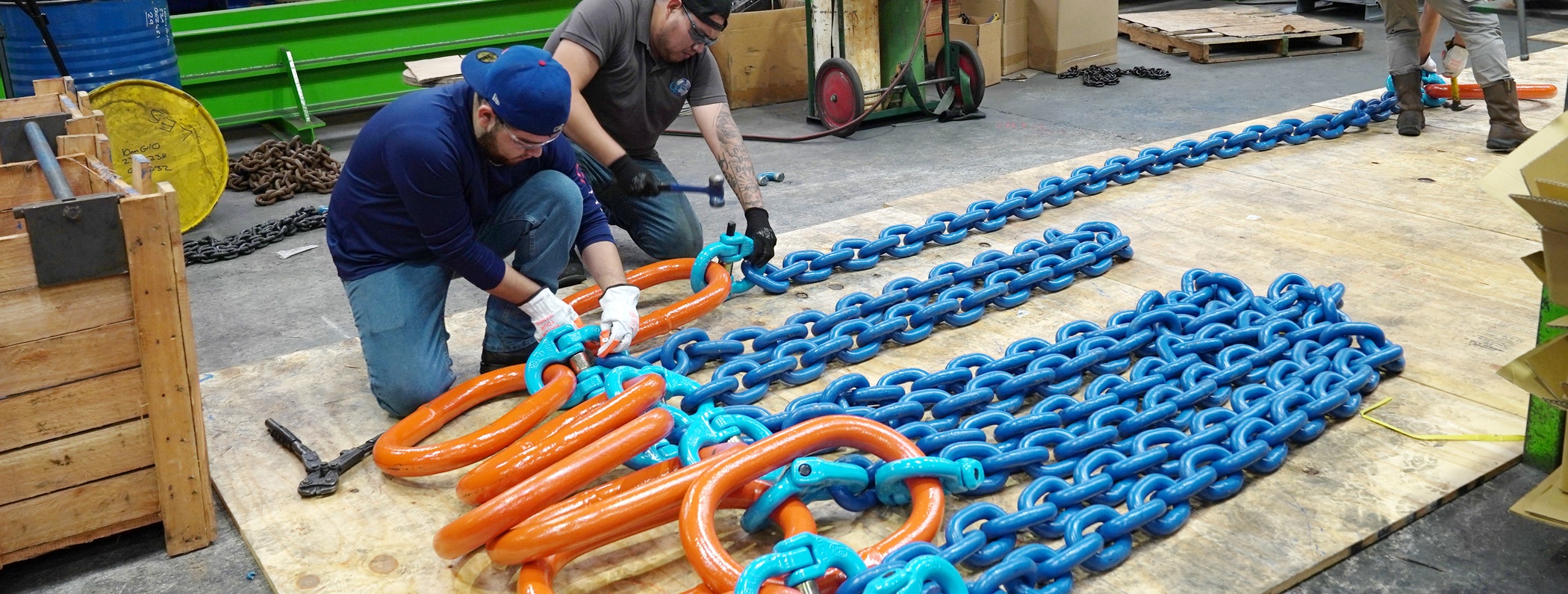
Holloway Houston manufactures alloy chain slings in Grade 80 and Grade 100 configurations, built directly in our Houston, Texas facility. Chain slings are available in single-leg, double-leg, and multi-leg assemblies to suit a vast array of heavy-duty rigging configurations.

Shop Chain Slings

Wire Rope Slings

Wire rope slings consist of multiple high-carbon steel wire strands laid helically around a central core, providing an exceptional strength-to-weight ratio and good flexibility for wrapping around large loads.

Wire rope slings perform remarkably well in construction applications that involve heavy abrasion, elevated temperatures beyond what synthetic slings can safely handle, and where a specific degree of flexibility is required that a rigid chain link simply cannot offer.

Holloway Houston stocks premium wire rope slings from leading global manufacturers. Wire rope slings are available in a variety of complex constructions, including mechanically spliced and Flemish eye configurations.

Shop Wire Rope Slings

Synthetic Round Slings

Synthetic round slings are constructed from continuous, endless loops of high-strength polyester yarn entirely enclosed within a protective, woven outer tubular cover.

They are exceptionally lightweight, highly flexible, and conform smoothly to varied load surfaces. Round slings provide excellent load protection because their soft body minimizes marking, scratching, or crushing on finished surfaces. Their inherent flexibility also makes them perfectly suited for tight basket hitches and tight choker configurations on irregularly shaped loads.

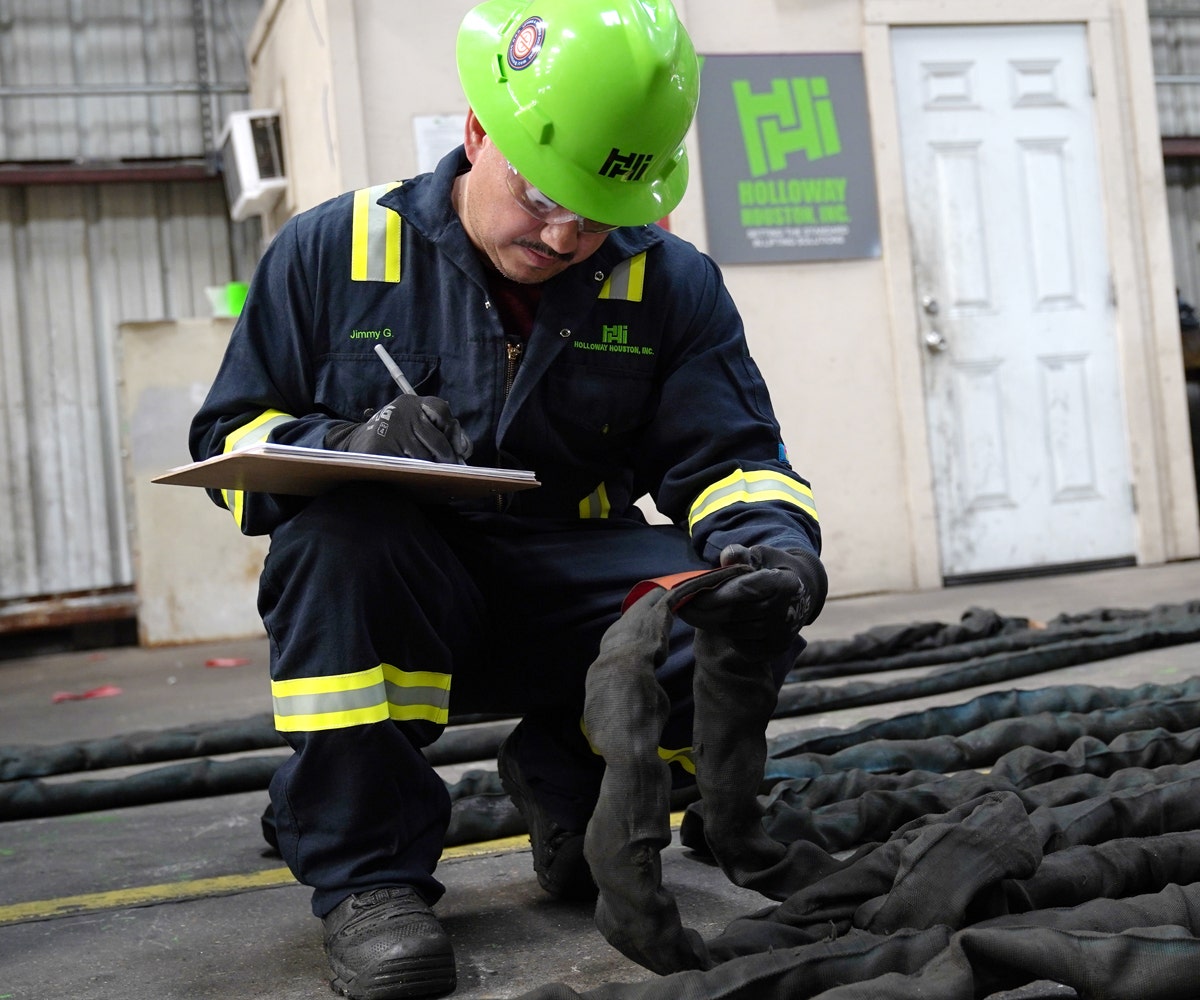
Holloway Houston manufactures polyester round slings directly in our Houston facility. Each round sling is rigorously proof tested to twice its vertical Working Load Limit (WLL) to confirm tensile strength and compliance with ASME B30.9 and WSTDA RS-1 requirements.

Shop Round Slings

Synthetic Web (Flat) Slings

Synthetic web slings are fabricated from tightly flat-woven nylon or polyester webbing. They provide a wide, flat bearing surface that distributes the load pressure across a much larger contact area than round slings, wire rope, or chain.

Web slings are a highly practical choice when load surface protection is the absolute priority and the load has a relatively uniform, broad shape.

Holloway Houston manufactures nylon web slings in our Houston facility. These web slings are available in eye-and-eye, endless loop, and other custom configurations per WSTDA WS-1 recommended standards.

Shop Web Slings

Sling Type Comparison

Factor Chain Sling Wire Rope Sling Synthetic Round Sling Synthetic Web Sling
Material Heat-treated alloy steel Steel wire strands around core Polyester yarn in
protective cover
Woven nylon or
polyester webbing
Temperature Tolerance Highest among common sling types High; exceeds
synthetic slings
Limited; follow
manufacturer limits
Limited; follow
manufacturer limits
Flexibility Low - rigid body Moderate -conforms partially High-conforms
to load shape
Moderate-flat
bearing surface
Abrasion Resistance Excellent Good Moderate-cover
provides protection
Moderate - webbing can snag or cut
Load Surface Protection Low-can mark or
crush surfaces
Low to moderate Excellent - soft contact Good - wide bearing surface
Weight Heaviest Heavy Lightest Light
Typical Applications Hot environments,
rough loads, foundry work
Construction, general heavy
lifting, outdoor work
Finished goods,
irregular shapes, marine
General purpose,
surface-sensitive loads

Note: No specific capacity numbers, temperature limits, or derating factors are included in this table. Rated capacities vary strictly by manufacturer, sling construction, and configuration. Consult the manufacturer WLL chart and sling identification tag for the specific sling in use.

When Chain Slings Are the Right Choice

Chain slings are almost exclusively selected when the operating environment involves elevated temperatures that would instantly melt or degrade synthetic materials. Foundry work, steel mill operations, hot-dip galvanizing, and applications where molten metal splash or intense radiant heat is present are typical examples.

Chain also stands up exceptionally well to brutal, abrasive loads such as raw castings, structural I-beams, and heavy machinery with sharp steel edges. Because individual links and connecting components can be inspected and replaced by the manufacturer, chain slings offer a degree of long-term serviceability that other sling types simply do not.

The primary tradeoff is dead weight and rigidity. Chain slings are the heaviest rigging option and do not conform to load surfaces the way synthetic slings do. They will easily mark, gouge, or crush finished surfaces and are less practical for loads where surface protection matters.

(For a deeper mathematical discussion of how sling angles affect chain sling capacity, see How Sling Angles Influence Chain Sling Capacity.)

When Wire Rope Slings Are the Right Choice

Wire rope slings offer a rugged balance of raw strength and moderate flexibility that makes them a highly common choice for civil construction, heavy infrastructure projects, and general heavy industrial lifting.

They handle highly abrasive conditions reasonably well and tolerate harsh outdoor exposure,including UV radiation, heavy moisture, and moderate temperature extremes,much better than synthetic alternatives.

Wire rope slings also perform exceptionally well in applications where the sling needs to partially conform to the load shape without the extreme softness of a synthetic option. They are available in numerous strand constructions (e.g., 6x19, 6x36) to match different flexibility requirements and service conditions.

When Synthetic Slings Are the Right Choice

Synthetic round slings and web slings are the preferred, default choice when load surface protection is a primary operational concern. Painted, powder-coated, polished, or otherwise finished surfaces benefit immensely from the soft contact that polyester and nylon materials provide.

Synthetic slings are also significantly lighter than chain or wire rope, which drastically reduces rigger fatigue and simplifies manual handling on fast-paced, repetitive lifts.

Round slings, with their extreme flexibility and ability to conform tightly around irregular shapes, are frequently selected for basket hitches and choker configurations on complex geometry (like pipe bundles or uneven machinery). Web slings, with their flat bearing surface, distribute compressive pressure beautifully on loads with broad, relatively flat contact areas (like boat hulls or large fiberglass tanks).

The critical limitation of synthetic slings is their extreme vulnerability to heat, long-term UV exposure, and chemical contact. Manufacturer documentation specifies strict temperature limits, chemical compatibility, and inspection criteria that differ greatly between nylon and polyester fiber materials. Polyester generally offers better UV resistance and retains its strength when wet, while nylon provides higher elasticity and energy absorption for shock loads.

(For a highly detailed mechanical comparison of round slings and web slings, see Round Slings vs Web Slings. For guidance on selecting the right synthetic sling, see How to Choose the Right Synthetic Sling.)

Key Selection Factors

Understanding the physical differences between the types of lifting slings is only part of the engineering equation. The specific conditions of the actual lift determine which sling type,and which specific sling within that type,fits the application safely. Below are the primary factors that directly affect sling selection.

Load Weight and Center of Gravity

The total gross weight of the load and the exact location of its center of gravity are the starting point for any sling selection decision. A sling's working load limit (WLL) is explicitly established by the manufacturer for specific hitch types (vertical, choker, basket) and specific sling angles from the horizontal plane. The WLL on the tag represents the absolute maximum load for a highly defined configuration,it is not a general-purpose, catch-all number.

Loads with an offset center of gravity place highly unequal forces on sling legs. Multi-leg sling assemblies or specific rigging configurations that account for asymmetric loading are complex considerations that fall strictly within formal lift planning.

Load Shape and Surface Condition

The geometry of the load dictates exactly how the sling contacts and holds it. Flat, uniform shapes work very well with web slings. Cylindrical, tapered, or highly irregular shapes often call for round slings that can wrap and conform tightly. Rough or sharp-edged loads may mandate chain slings, or the mandatory use of heavy-duty edge protection (corner protectors, Kevlar wear pads) when synthetic slings are used.

Surface condition matters significantly. Oily, painted, galvanized, or otherwise chemically treated surfaces can interact negatively with sling materials. Manufacturer documentation strictly addresses chemical compatibility for all synthetic sling fibers.

Environmental Conditions (Heat, Chemicals, Outdoor Exposure)

Heat: Chain slings tolerate the highest temperatures among common sling types. Wire rope slings handle moderate heat. Synthetic slings have the lowest temperature tolerance, and specific melting points/degradation limits vary by fiber type and manufacturer. Manufacturer documentation and the applicable standard define the exact temperature range for each product.

Chemicals: Acids, alkalis, solvents, and other industrial chemicals affect different sling materials in violently different ways. Nylon and polyester have highly distinct chemical resistance profiles. Manufacturer compatibility charts are the only authoritative reference.

Outdoor Exposure: UV radiation breaks down synthetic fibers over time. Polyester is generally more UV-resistant than nylon. Chain and wire rope are largely unaffected by UV but are subject to rapid corrosion without proper lubrication, storage, and maintenance.

Sling Angle from Horizontal

When slings are used in multi-leg bridle hitches, the angle between the sling leg and the horizontal plane directly multiplies the tension load carried by each leg. As the sling angle from horizontal decreases (meaning the legs spread wider apart), the physical tension force on each leg increases dramatically.

ASME B30.9 and manufacturer WLL charts mathematically account for sling angle in their published rated capacities. Sling identification tags and manufacturer capacity charts typically display rated loads at specific angles from horizontal (usually 60, 45, and 30 degrees). Understanding exactly how angle affects capacity is essential context for anyone involved in sling selection.

Reading Sling Identification Tags

What the Tag Tells You

ASME B30.9 specifically addresses identification and marking requirements for all sling types. Per the standard, slings are to be identified with specific, legible information so the user can physically verify the sling is appropriate for the intended lift. OSHA regulations under 29 CFR 1910.184 and 29 CFR 1926.251 also mandate specific sling marking requirements in general industry and construction, respectively.

The critical information typically found on a sling identification tag includes:

  • Manufacturer name or trademark
  • Rated capacity (WLL) for applicable hitch types (vertical, choker, basket)
  • Sling angle upon which the rated capacity is based (always stated as angle from horizontal)
  • Sling material (alloy steel grade, wire rope construction, or synthetic fiber type)
  • Sling size and length (reach)

For alloy steel chain slings, OSHA 1910.184 indicates that slings shall have permanently affixed durable identification stating size, grade, rated capacity, and reach. For synthetic web slings, the identification tag includes the rated capacity for each hitch type, the specific material type, and the manufacturer's code or stock number.

If a sling has a missing, damaged, or illegible tag, it must be removed from service immediately and returned to the manufacturer for re-identification and testing.

Manufacturer WLL Charts

Beyond the tag itself, manufacturers publish detailed WLL charts that provide rated capacities across a broad range of hitch types, sling angles from horizontal, and sling sizes. These charts are the definitive engineering reference for capacity information.

Manufacturer WLL charts typically show:

  • Vertical hitch capacity
  • Choker hitch capacity
  • Basket hitch capacity at specified angles from horizontal

The data stamped on the tag of the sling should correspond perfectly to the values in the manufacturer's chart for that specific sling model and configuration. If there is any discrepancy, the manufacturer must be contacted to verify.

Sling Care and Inspection Awareness

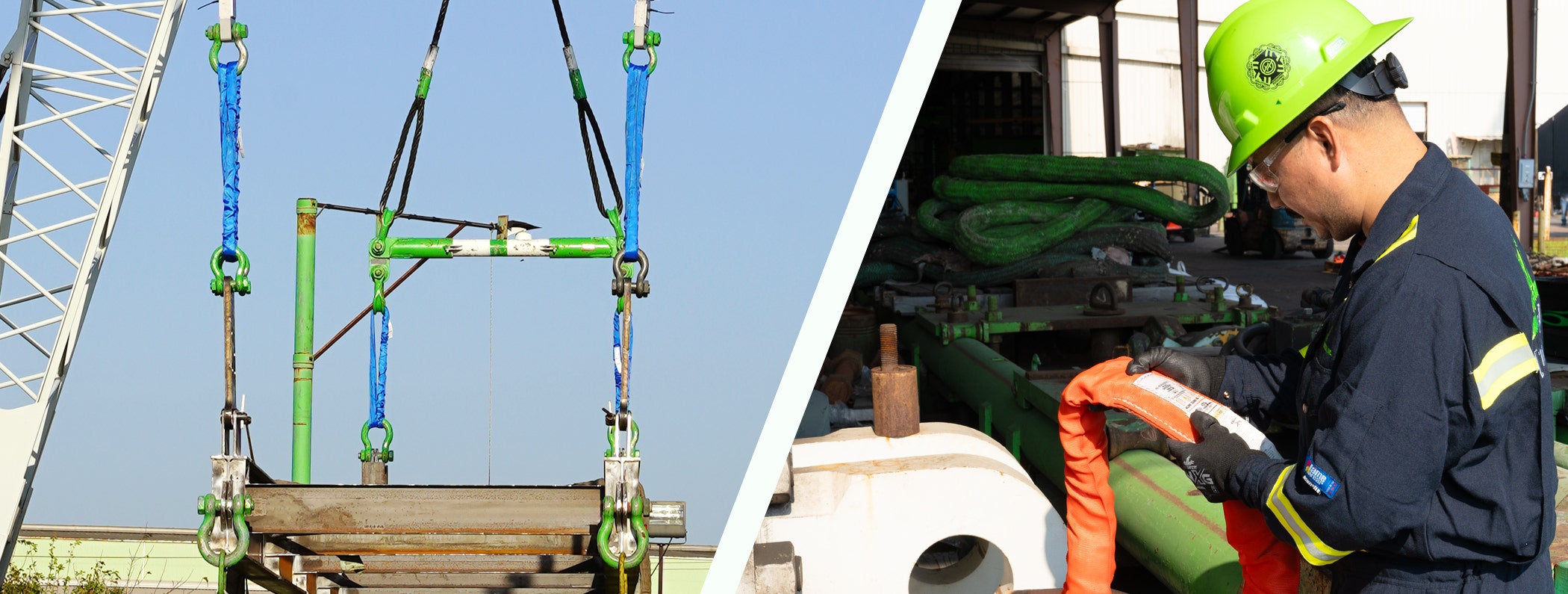
Proper physical storage and rigorous regular inspection extend sling service life and help prevent catastrophic in-service failures. OSHA regulations and ASME B30.9 mandate strict sling inspection requirements, and manufacturer documentation provides product-specific inspection criteria.

Storage Practices

Slings that are not actively in use should be stored in a clean, dry location away from direct sunlight, corrosive chemicals, and extreme temperatures. OSHA 1926.251 notes that rigging equipment, when not in use, shall be removed from the immediate work area so as not to present a trip or snag hazard to employees.

Specific storage considerations include:

  • Chain slings: Store on heavy-duty racks or A-frame hooks; keep off the ground to prevent dirt contamination and corrosion. Avoid piling or stacking in ways that can cause kinking or mechanical damage.
  • Wire rope slings: Store on racks with large radius hooks; avoid sharp bends that can permanently distort the rope structure. Keep away from moisture and corrosive environments when practical.
  • Synthetic slings (round and web): Store in dark areas away from UV exposure, heat sources, and chemical storage. Storing synthetic slings off the ground helps prevent moisture absorption and contact with cutting hazards or debris.

When to Remove a Sling from Service

OSHA 1910.184 dictates that each day before being used, the sling and all fastenings and attachments shall be inspected for damage or defects by a competent person designated by the employer. Damaged or defective slings shall be immediately removed from service.

ASME B30.9 provides exact removal-from-service criteria for each specific sling type. Common conditions that typically warrant immediate removal include:

  • Missing or illegible identification tag
  • Cracks, nicks, or deep gouges in chain links, shackles, or wire rope end fittings
  • Deformation of chain links, connection fittings, hooks, or master links
  • Broken wires in wire rope slings
  • Heat damage , discoloration, brittleness, or physical evidence of exposure beyond rated temperature limits
  • Cuts, tears, snags, or severe abrasive wear in the synthetic sling body or protective cover
  • Acid or chemical damage
  • Corrosion heavily affecting structural integrity
  • Knots or unauthorized modifications

The specific numerical criteria for each sling type vary. Manufacturer inspection manuals and the applicable sections of ASME B30.9 provide highly detailed guidance. A qualified person, as defined by the employer's safety program, must make the final determination on whether a sling remains fit for service.

Frequently Asked Questions

The four most common types of lifting slings used in commercial rigging are alloy steel chain slings, wire rope slings, synthetic polyester round slings, and synthetic web (flat) slings. ASME B30.9 also addresses metal mesh slings and synthetic fiber rope slings, though these are less frequently encountered in general rigging applications. Each sling type has distinct characteristics in terms of strength, flexibility, temperature tolerance, and load surface protection. The right choice depends on the specific conditions of the lift, including load weight, shape, environment, and surface requirements.
Chain slings made from alloy steel generally offer the highest temperature tolerance among common lifting sling types. Wire rope slings also handle elevated temperatures better than synthetic options. Synthetic round slings and web slings have more limited temperature ranges, with specific limits established by the manufacturer for each product. Manufacturer documentation is the authoritative source for the temperature rating of any specific sling. When heat exposure is a factor, the sling's rated temperature limits per the manufacturer should be verified before use.
Synthetic slings can be used on loads with edges, but edge protection is generally needed to prevent cutting or abrasion damage to the sling body. Corner protectors, wear pads, and protective sleeves are common accessories used to shield synthetic slings from sharp contact points. Without adequate protection, a sharp edge can cut through webbing or the outer cover of a round sling, potentially causing failure under load. If edge protection is not practical, a chain sling or wire rope sling may be more appropriate for the application.
Synthetic polyester round slings use a color coding system that corresponds to capacity ranges. This system follows WSTDA RS-1 guidelines and helps users identify the general capacity class of a round sling at a glance. However, color coding is a visual aid -- it is not a substitute for reading the sling identification tag. The tag provides the actual rated WLL for each hitch type and configuration. The tag and the manufacturer WLL chart are the authoritative references for rated capacity, not the color alone.
A sling identification tag typically includes the manufacturer name or trademark, rated capacity (WLL) for applicable hitch types, the sling angle from horizontal upon which the capacity is based, material type, and sling size and length. ASME B30.9 and OSHA regulations address identification requirements for different sling types. The tag is the primary in-field reference for confirming that a sling is appropriate for a given lift configuration. If the tag is missing, damaged, or illegible, the sling should be removed from service and returned to the manufacturer for re-identification and testing.
A sling should be removed from service when inspection reveals any condition that could affect its load-bearing capability. Common conditions include: missing or illegible identification tags, cracks or deformation in chain links or fittings, broken wires in wire rope slings, cuts or tears in synthetic sling material, evidence of heat or chemical damage, and corrosion affecting structural integrity. OSHA 1910.184 states that each day before use, slings shall be inspected by a competent person, and damaged or defective slings shall be immediately removed from service.
Synthetic polyester round slings generally offer the best flexibility and conformability for irregular or oddly shaped loads. The continuous loop of polyester yarn inside the protective cover allows the sling body to wrap around curves, contours, and uneven surfaces in a way that chain slings and web slings cannot easily replicate. This flexibility makes round slings well suited for basket hitches and choker configurations on loads like pipe bundles, machinery, and equipment with complex geometry.

Shop Lifting Slings at Holloway Houston

Holloway Houston manufactures heavy-duty round slings, web slings, and alloy chain slings directly in our ISO-certified Houston facility. Wire rope slings, shackles, and connection hardware are available from Holloway Houston through our extensive distribution network.

Whether the application calls for a single-leg chain sling for foundry work or a polyester round sling for handling finished goods, Holloway has the specific sling inventory and the engineering expertise to support your lift plan safely.

Browse our lifting slings and rigging products online, or contact us for expert assistance selecting the exact sling for your application.