5 Most Common Types of Rigging Hardware

When it comes to moving and lifting heavy loads, using the right rigging hardware is crucial. This equipment supports operations in industries like mining, logging, and excavation. Proper rigging hardware helps complete these processes safely and efficiently. Below are some of the most common types of rigging hardware and their key uses.
1. Blocks & Pulleys
Blocks and pulleys play a key role in lifting heavy loads with less effort. By reducing the amount of force required, these tools make it easier to hoist heavy objects. There are different types of blocks and pulleys, including snatch blocks, swivel blocks , single and double pulleys, and square blocks. Pulleys often work alongside rigging ropes, where the rope is threaded through the pulley multiple times before being secured to the load. This setup distributes the load more evenly and allows for controlled lifting.
2. Eye Bolts
Eye bolts serve as essential anchor points for rigging operations. Available in various sizes and materials, they support different lifting needs. Two common types of eye bolts are shoulder eye bolts and straight eye bolts. Shoulder eye bolts are used when there is an angular load, while straight eye bolts are suited for direct, in-line pulls. Other types include screw eye bolts, U-bolts, and lag eye screws, each designed for specific tasks. Their versatility makes them a must-have for many rigging setups.
3. Rigging Hooks
Rigging hooks come in different shapes, sizes, and capacities to meet diverse lifting requirements. Depending on the task, you might use hoist hooks, sling hooks, or rigging hooks. Heavy-duty sling hooks, such as swivel eye stainless steel hooks, can handle large loads, making them valuable in demanding applications. Their design allows for quick attachment and detachment, improving workflow efficiency. These hooks are vital in hoisting, lifting, and load-securing tasks.
4. Wire ropes & accessories
Wire ropes are a staple in lifting, mooring, and rigging operations. Often made from stainless steel, they offer flexibility and strength. Wire ropes are classified by strand patterns, with 6×19 and 6×37 being among the most popular configurations. To complement wire ropes, several accessories are used, including clips, thimbles, sleeves, and stops. These components support secure connections and extend the usability of wire ropes in lifting tasks. Proper handling and inspection of wire ropes and their accessories are essential to maintain their performance.
5. Stainless steel nuts
Stainless steel nuts are small but essential components in many rigging operations. They connect and secure different pieces of hardware. Common types include hex nuts, ball ends, dome nuts, wing nuts, and lifting eye nuts. Most of these are made from type 316 stainless steel, known for its resistance to corrosion. Stainless steel nuts are available in right-hand (RH) and left-hand (LH) threads, giving users flexibility in their applications. These nuts are widely used in assembly, lifting, and load-bearing tasks.
Maintenance and Safety Tips
While selecting the right rigging hardware is essential, proper maintenance is just as important. Regular inspections help identify wear and damage before they escalate. Look for signs like cracks, bends, or corrosion, as these can impact performance. Following manufacturer’s guidelines for storage, usage, and maintenance helps prolong the life of rigging equipment and reduces the risk of accidents. Timely maintenance also keeps each component ready for use.
Take Action
- Need quality rigging hardware? Browse our selection of blocks, pulleys, eye bolts, hooks, and more.
- Want expert advice? Contact us for personalized guidance on selecting the right rigging hardware.
- Looking for lifting equipment? Explore our range of wire ropes , hooks, and other essential rigging products.
Whether you’re hoisting loads at a job site or managing an industrial project, the right rigging hardware makes a difference. Make your lifting operations more efficient with dependable equipment designed for the task at hand.
-

 Holloway Chain Sling | 1-Leg (Grade 100) | 3'
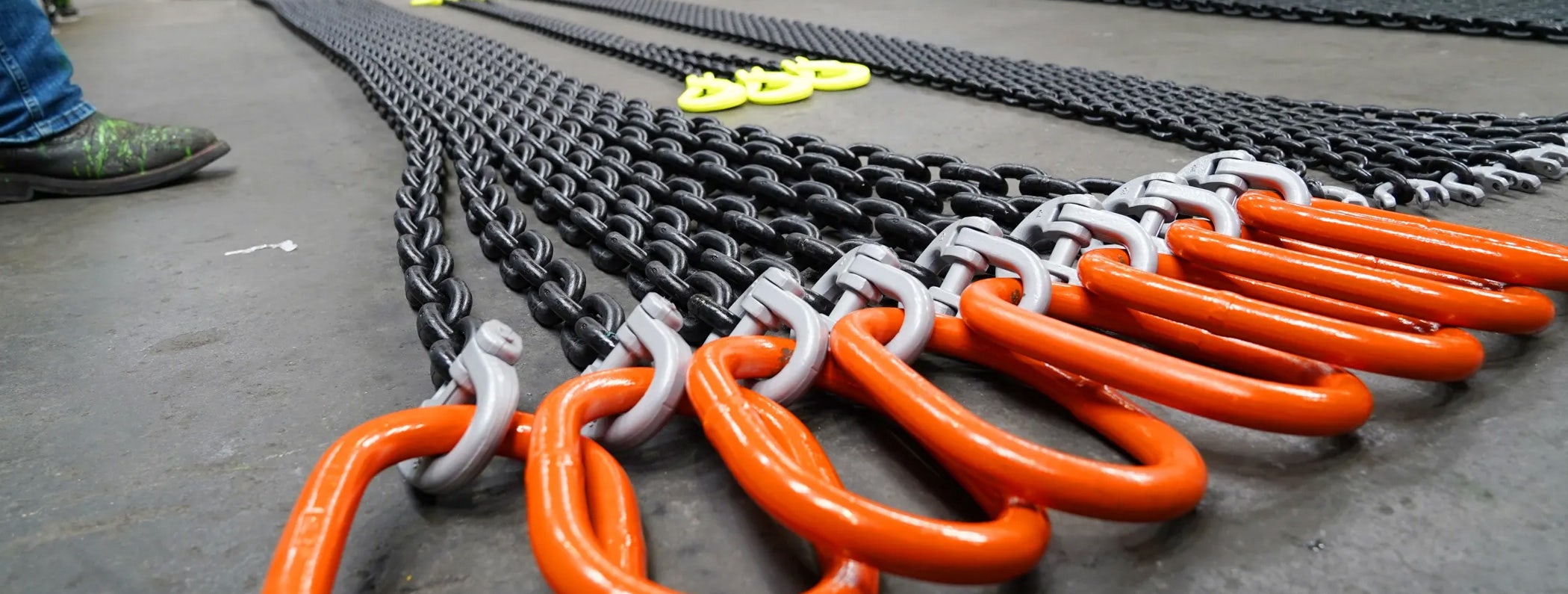
3-Foot Holloway Brand 1-Leg Chain Slings are manufactured in Houston, Texas USA using the highest quality components available. Go factory-direct! Our Grade 100 Chain Slings are protected with a tough black coating for superior rust protection and performance. They are certified to meet or exceed industry standards for overhead lifting operations and are proof-tested to twice their Working Load Limit (WLL) at our testing facility. Grade 100 components can lift up to 25% more than Grade 80 — use a smaller chain diameter to meet the same WLL. Each sling is guaranteed to conform to ASME standards and comes with a metal tag including mill certificate, proof test, conformance certifications, and MTR information. When you want the best quality and value, no one beats Holloway!
Fast shipping: in-stock slings ordered before 10am Central are usually shipped the same day.
Learn More -

 Holloway 1/4" Chain Sling | 2-Leg (Grade 100) | DOG | WLL 7400lbs at 60° | Grab Hooks | 3'The Holloway Chain Sling with grab hook, 3 ft length, stands as a robust and versatile lifting solution, and excels in delivering superior strength and durability, making it an ideal choice for the safe and efficient lifting of heavy equipment, machinery, and materials. Its 2-leg configuration enhances stability and is tailored for reliable lifting solutions. Built in Houston. Components sourced from trusted brands. Final product may vary from image. Learn Morewas $147.00 Special Price $132.30
 -

 Holloway Heavy Duty Eye & Eye Flat Web Sling | 3 Ply | NylonSlings are available in nylon or polyester webbing. Minimum 5:1 design factor. Do not exceed rated capacities. The ratings must be reduced when lifting at angles of less than 90 degrees with the horizontal. Learn MoreAs low as $19.83 was $22.53
 -

 Endless Polyester Round Lifting Sling | HHERS2 | Green - 5,300 lbs WLLLift confidently with our green polyester round lifting sling. Versatile and durable, it guarantees safe lifting in various applications. Learn MoreAs low as $9.62 was $10.46
 -

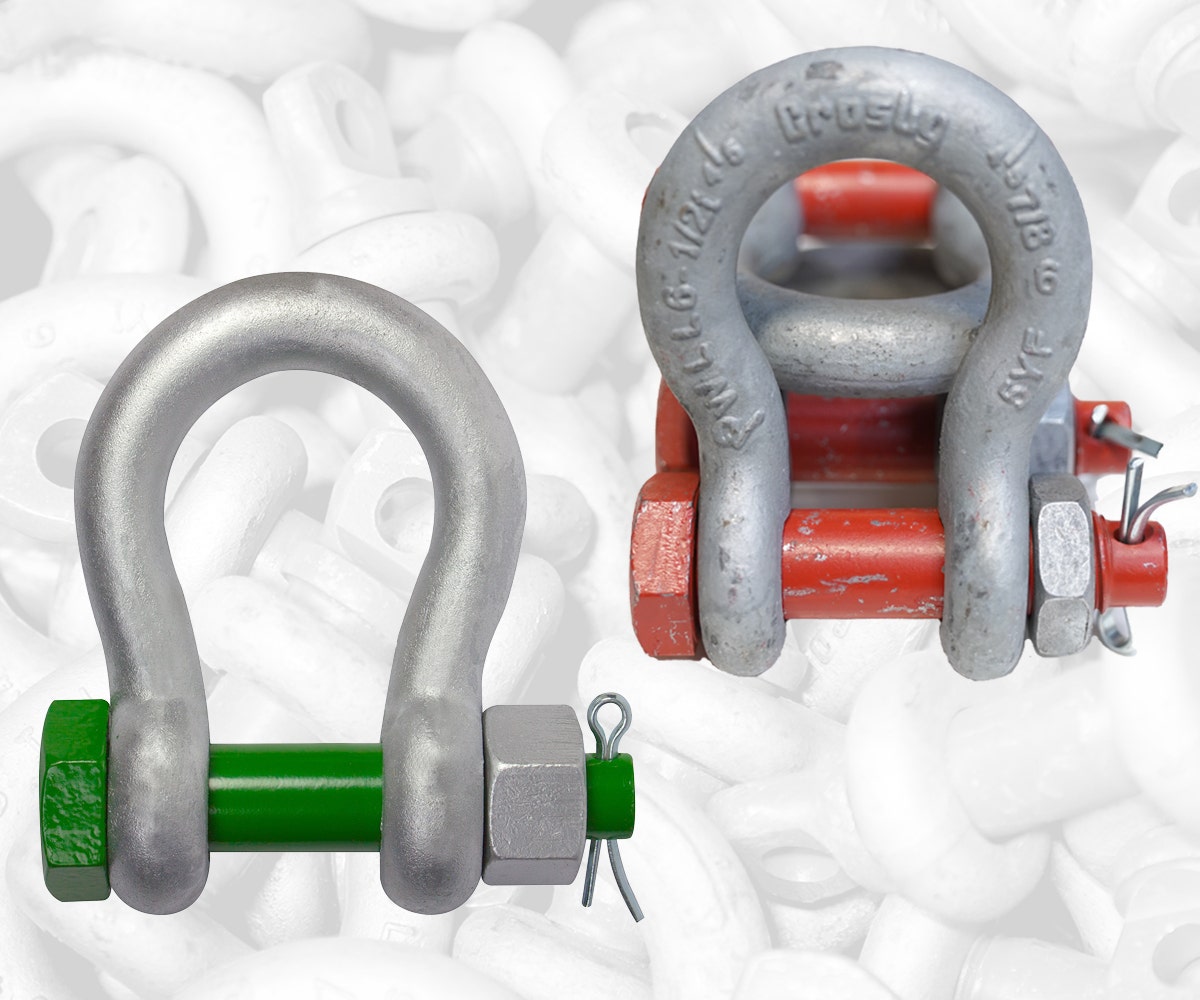
 Crosby G-2130 Bolt Type Anchor Shackle - 3/16" - 1019464The 3/16" Crosby G2130 shackle is designed for heavy-duty work with permanent or long-term applications. The product's construction is corrosion-resistant and meant to accommodate pulling from all angles. Learn More$15.66