
Wire Rope Clamps: How to Choose the Perfect Wire Rope Clamps


Wire ropes are one of the most critical pieces of rigging and lifting hardware. You can use wire ropes for lifting, rigging, and tying loads of virtually any size, shape, and type. To make the most out of wire ropes, however, you need a few additional rigging equipment, one of which includes wire rope clamps.
Also known as wire rope clips, riggers often use this nifty little piece of hardware at the end of the length of a wire rope. You can use a wire rope clamp to:
- Tie two wire ropes together using a lap splice.
- Create a load-bearing eye at the end of a wire rope by bending the end of the same wire backward.
In short, a cable clamp is what makes a wire rope one of the most versatile pieces of rigging hardware. As these clamps come in different shapes, sizes, and materials, you will need to choose one that perfectly fits your lifting and rigging application. But before we get down to that, first, you need to understand what is wire rope clamp, its types, and a few other things.
Shop Wire Rope ClipsWhat Is a Wire rope clamp?
It is a simple mechanical device. A typical wire rope clip consists of a saddle, U-bolt, and two hex nuts. This simple device is suitable for less permanent rigging and lifting applications. You must never use wire rope clips to make industrial slings.
OSHA 29 CFR 1910.184(f)(3) addresses when wire rope clips may be used to fabricate wire rope slings. In other words, you need to be careful when using rope clamps. You can use a wire rope clip to create an end loop for a winching or crane cable. You can also use it to build perimeter cables or increase the length of a wire rope going through a D-shackle or eye bolt.
Types of clamps
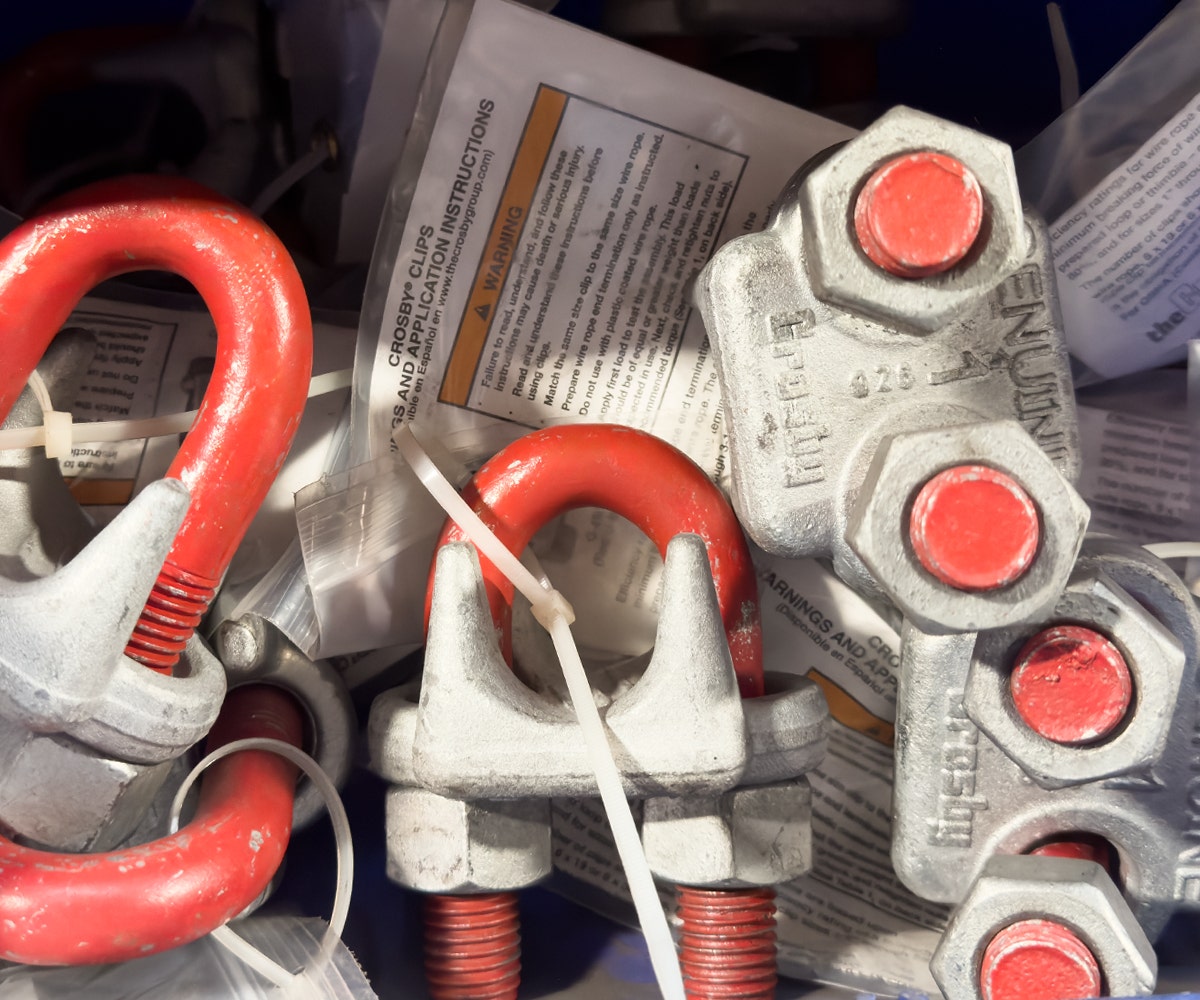
Based on their shape, there are two types of cable clamps, U-bolt and double saddle. They both have unique mechanical properties and hence applications.
1. Traditional U-Bolt Wire rope clamps
These cable clamps consist of a U-bolt, two nuts, and a metal base called a saddle. The U-bold passes through the saddle, which you can tighten with the two nuts. They come in various sizes and types of materials, including stainless steel and galvanized steel. You can choose a U-bolt wire rope clamp depending on your rigging or lifting application.
2. Double Saddle Wire rope clips
A double-saddle (fist grip) clip consists of two mirrored saddles secured by two bolts and two nuts. This unique design also means you can use these in either direction, which makes them more user-friendly.
Material From Which Wire rope clamps Are Made
Usually, there are three types of materials used for making rope clips. You can choose a material based on your application as each one comes with its unique strengths and weaknesses.
1. Drop Forged Galvanized
In this type of wire rope clip, the base or saddle is made from forged steel. The manufacturing process involves heating and hammering the clips into desired shapes. Riggers often use these cable clamps for critical and heavy-duty applications as they are very strong. You can see them in winch lines, crane cables, hoist lines, towing lines, scaffoldings, guy lines, and even tie-downs.
Properties Of Drop Forged Galvanized U-Bolt Wire rope clamps
- They cost less than stainless steel wire rope clips.
- They are more suited for outdoor environments.
- But, they are not as corrosion resistant as their stainless-steel variants.
2. Malleable Galvanized
The base or saddle is made from cast iron. As cast iron lacks the metal properties of stainless steel, it is not that strong. So, the malleable galvanized wire rope clamps are not very strong. They can break under heavy usage. You will see them being used in small or light-duty applications like fencing, parameter cables, or guard rails.
Properties Of Malleable Galvanized Wire rope clamps
- They can be used in outdoor environments.
- But they are not as corrosion resistant as other types of wire rope clamps.
- Their surface can develop rust quickly when exposed to rain, snow, salty air, or saltwater environments.
3. Stainless Steel
Drop-forged clips are the type associated with heavy-duty and load-bearing terminations. Stainless clips are typically selected for corrosion service. Manufacturer documentation states which type is rated for a given application. The base or saddle is made from high tensile strength stainless steel. They are durable and easy to use. You can find these cable clamps in temporary guard rails, flag posts, and other outdoor rigging applications.
Properties Of Stainless-Steel Wire rope clamps
- These are the most corrosion-resistant wire rope clamps.
- Being highly resistant to surface rust, even in saltwater environments, they are best suited for outdoor environments.
- As stainless steel is costly, they are a little expensive compared to other types of clamps.
Wire Rope Clip Selection Considerations
Wire rope clamps are an essential part of the rigging hardware. You can’t do away with them. But you have to make sure to use the right ones to keep the load and the riggers safe. If a wire rope snaps because you used the wrong type of clip, it can lead to disastrous consequences.
Here’s what you need to keep in mind when choosing a wire rope clamp.
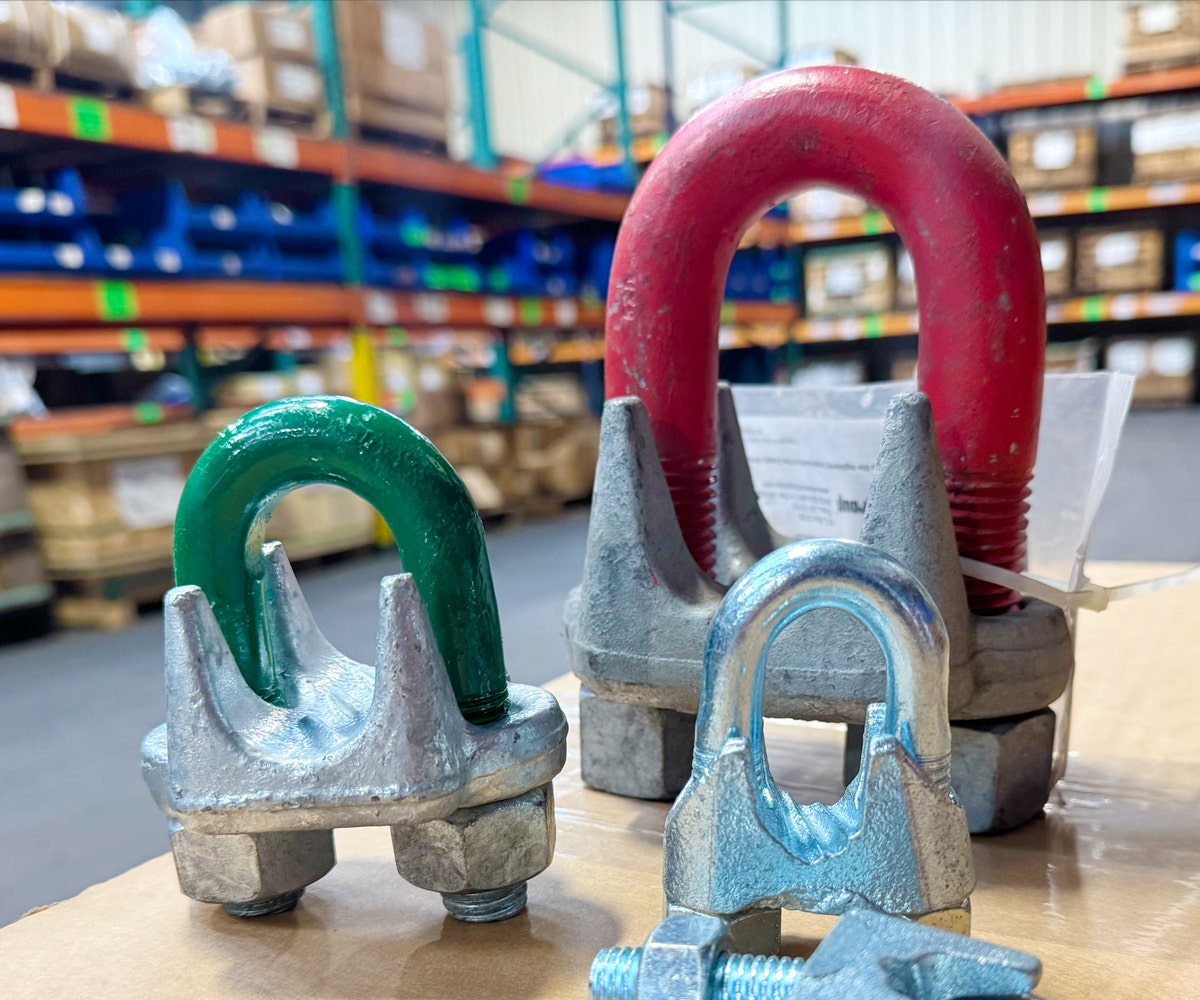
1. Get It from A Reliable Rigging Hardware Manufacturer
The first step in choosing cable clamps is to buy them from a trusted and reputed rigging hardware manufacturer. The last thing you want is to use a defective or poor-quality clip. This will compromise the safety of your load and your crew.
2. The clip manufacturer's instruction sheet states the applicable size, count, and torque.
As you can see, each wire rope clamp comes with unique properties. You need the instruction manual to understand when, where, and how to use the cable clamps. Make sure the clamps are accompanied by respective user manuals when making a purchase.
3. Consider Your Work Environment
By now, you know that some cable clamps are more suited for outdoor environments, while others aren’t. As a result, carefully think about where you want to use the wire rope clips. For example, Drop-forged clips are the type associated with heavy-duty and load-bearing terminations. Stainless clips are typically selected for corrosion service. Manufacturer documentation states which type is rated for a given application.
4. Consider Your Load Specifications
Taking into account how large and heavy the load is also equally important. Heavier loads will require strong cable clamps that won’t break under stress. Also, Wire rope clips are used in both temporary and permanent installations, including guy lines, scaffolding, and perimeter cables, when installed and inspected per the manufacturer's instructions.
5. Conduct Expert Inspection
Lastly, it’s always better to get an expert on board when shopping for wire rope clips. Maybe you can hire an engineer or expert with considerable field experience to help you choose the right types of clamps. An expert will help you take every detail into account before making the purchase. Remember, if you choose the right cable clamps right off the bat, you’ll save considerable time and money down the line.
In Conclusion
Wire rope clamps are one of the essential rigging hardware. They land wire ropes more flexibility, allowing you to handle a wide range of applications with ease and safety. These are some tips that will help you choose the appropriate clamp for your need.
Holloway Houston sells different types of clamps and other rigging hardware, both online and offline. If you are looking for reasonably priced and high-quality cable clamps or other hardware, check out our online store or reach out to our experts.
Shop Online Wire Rope ClipsFrequently Asked Questions
Wire rope clamp installation involves following the manufacturer's instruction manual for the specific clamp model, including saddle orientation, clip spacing, and torque specifications. On a U-bolt clip, the saddle belongs on the live (load-bearing) rope end the U-bolt on the dead end. Number of clips, spacing, and torquing sequence vary by rope diameter and clip type. Manufacturer documentation is the governing reference for each specific assembly.
A U-bolt wire rope clip uses a U-shaped bolt, a saddle, and two hex nuts. The saddle is asymmetrical, so orientation matters during installation. A double-saddle clip uses two mirrored saddles with no bolt, allowing it to be installed in either direction. Double-saddle clips are often described as more user-friendly for that reason. Both types are generally suited for temporary applications; neither is intended for sling fabrication under ASME B30.9.
- Drop-forged galvanized steel : forged base, used in heavy-duty applications like crane cables, winch lines, and scaffolding guy lines
- Malleable galvanized cast iron : lighter-duty applications such as fencing and perimeter cables; lower strength and more susceptible to surface rust than forged steel
- Stainless steel : highest corrosion resistance; commonly found in saltwater, outdoor, and marine environments
Wire rope clips are generally not used to fabricate lifting slings. ASME B30.9 addresses mechanical terminations that require periodic retightening, and industry practice treats wire rope clip assemblies as less permanent connections. Common applications include forming end loops for crane and winch cables, building perimeter cables, and extending rope through hardware. For fabricated slings, mechanically pressed or Flemish eye terminations are the standard approach. Browse Holloway Houston wire rope slings.
November 21, 2021
|
Categories: Products
|
By: Holloway Houston, Inc.
View our blog disclaimer
The content provided is for general informational purposes only and is not a substitute for professional advice. Holloway Houston, Inc. is not responsible for any actions taken based on this information.
About the Author


Grade 70, 80, and 100 Chain: How the Grades Differ and When Each Applies
News •
August 20, 2026

Automatic Crane Hooks: Remote Engagement and Release
Products •
July 31, 2026

Crane Hooks: Types, Safety & Selection Guide
Products •
July 30, 2026


What is Working Load Limit (WLL)? A Guide for Rigging Buyers
News •
July 29, 2026