William Hackett Launches the Offshore Subsea Lever Hoist: Ss-l5 Qp

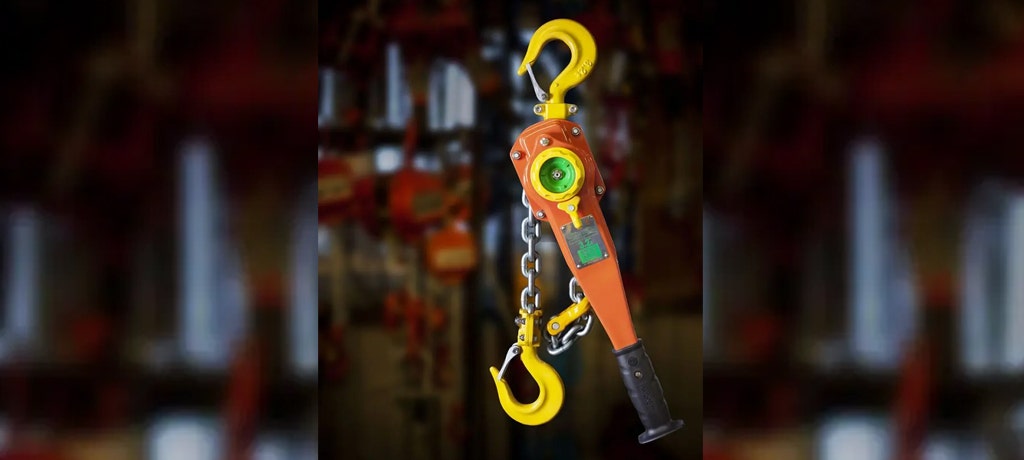
William Hackett launches the safest and most efficient offshore subsea lever hoist: SSL5 with patented quad pawl mechanism.
Game changer in offshore and subsea lifting projects: New generation of lever hoists offer the highest levels of safety and performance with the world’s first quad pawl mechanism.
- safety: enhanced built-in failure resilience. Patented quad pawl technology allows the SSL5 to operate safely should individual pawls or springs fail. With double the number of offset pawls in a lever hoist, from two to four, the load is spread securely against the ratchet gear to provide increased redundancy and resilience for the user
- cost: 80% reduction in capital spend on new hoists per mobilization with warranted multi-immersion use. SSL5 reduces purchase, servicing, and transportation costs, which delivers better cost efficiencies on projects and big savings for operator budgets
- performance: SSL5’s dual-action brake mechanism and intelligent inertia capability improves the user’s safety and rigging productivity in both subsea and topside applications
- durability: lighter in weight thanks to the quality of design and materials used, the SSL5’s performance to weight ratio reduces the risk of injury to the user during handling such as in logistics and rigging (due to its reduced unit mass)
- environmental credentials: multi-immersion use reduces the number of hoists needed on a mobilization, resulting in less single-immersion hoists being decommissioned after use, which is better for the environment and a more sustainable solution for industry
- proven compliance: meets with EN 13157, American Standard ASME B30.16-2012, Australian Standard AS1418.2-1997, NORSOK R-002: 2017, South African Standard SANS 1594:2007, DNV verification for multi immersion and company standard BP (DEV-AAD-SS-SD-BP-0545).
________________________________________________
Abu Dhabi, November 11, 2019: William Hackett, world-leaders and original pioneers of offshore lifting hoists and chains take a major step forward with the launch of the SSL5 incorporating its patented quad pawl (QP) mechanism – positioned as the safest and most efficient offshore and subsea lever hoist in the world.
“It’s a piece of engineering innovation that will transform safety levels globally when lifting offshore and in subsea operations using lever hoists,” says Ben Burgess, Director at William Hackett. “We’ve designed this hoist to provide the highest level of safety, with increased levels of redundancy and resilience to failure. Its QP offset load-bearing mechanism is the best in the market, and it offers enhanced operating performance compared to twin pawl products.”
William Hackett launches the safest and most efficient offshore subsea lever hoist: SSL5 with patented quad pawl mechanism.
The patented QP mechanism synchronizes a set of four pawls which constantly work together to minimize the time and distance traveled to the next point of engagement. “It overcomes jamming and unintended malfunctions that can be experienced when using other simpler first-generation products,” says Burgess. “This helps to minimize project downtime or costly delays to work scopes, providing total peace of mind for operators and marine contractors.”
SSL5 also overcomes the current industry-norm of single-use immersion hoists. Burgess highlights: “Big savings are achievable with this device. The capability of the SSL5 to be immersed multiple times means it can significantly reduce capital investment on new hoists per mobilization by up to 80%.”
Customer controlled field trials reveal William Hackett’s SSL5 hoists were immersed 12 times over a 60-day period. It successfully past a rigorous multi-immersion test, inspection and operation program witnessed and verified by DNV GL.
“We are helping operators to make better choices and overcome purchasing large quantities of single-use hoists,” says Burgess. “The historic paradigm of single-use hoists, which are often used once and then discarded, is very expensive and not good practice from an environmental perspective. The use of single immersion hoists isn’t sustainable for today’s industry and is representative of an out-dated practice. Customer decision-making criteria is beginning to reflect this.”
The SSL5 innovation is the result of William Hackett’s long term investment strategy. “We’ve worked hard to create a technically-superior lever hoist that saves our customers money, delivers improved cost efficiencies and consistently performs on safety for those valuable payloads.”
Safe and continual performance of lifting equipment crucially depends on minimizing risk through improved resilience to failure. Burgess highlights: “We are all too aware of industry incidents that are reported from across the world. For us, it is important to continually innovate and develop our lifting solutions to mitigate potential areas of failure.”
An increasing number of employers and stakeholders in the Middle East are recognizing that lifting is a safety-critical activity. The International Labour Organization (ILO) recently unveiled estimates highlighting the root cause of 59% of lifting incidents being attributed to a human factor with 33.3% being caused by equipment failure.
“Our investment and focus on safety are strictly aligned with organizations such as the Institution of Occupational Safety and Health (IOSH), and the Abu Dhabi Quality and Conformity Council (QCC) that support safety standards for lifting equipment being used in the Emirate.”
William Hackett forecast significant demand for their latest range of hoists in upcoming infrastructure projects, with industry revenue expected to grow at an annual rate of 2.5% to reach £3.6 billion later this year reports IBIS World.
“The UAE is a key part of our strategic focus where it is not so reliant on oil, which makes up around 30% of its economy, but more reliant on foreign investment to create infrastructure,” says Burgess. “There are challenges for the economy, but projects such as UAE’s Expo 2020 is a big initiative, so we believe there’s a large part to play in supporting the region to build their infrastructure safely and securely with our hoist technology. We are in a very good market position with this latest innovation and are delighted to be making the official launch of the SSL5 QP lever hoist in the UAE at the Abu Dhabi International Petroleum Exhibition & Conference (ADIPEC).”
About William Hackett
William Hackett was founded in England in 1892 and has been manufacturing chain related products, celebrating its 125th Anniversary in 2017. In 1989 the company established a lifting division in Northumberland, UK, and today is a global supplier of lifting equipment and chain products into lifting, lashing, marine, mining, energy and agricultural markets around the world.
William Hackett is renowned for its ethos of integrity and dependability, which is built on its world-class service in design, assembly, certification, compliance, and distribution capabilities.
Download the PDF: Holloway Houston – SS-L5 QP
Shop Online Chain Hoists-

 William Hackett SS-L5 Qp Subsea Offshore Lever HoistsThe William Hackett SS-L5 QP lever hoist is a second-generation subsea hoist built for offshore operations. Certified to meet international standards, it offers a working load limit range of 800kg to 15 tonnes and features a unique quad pawl system for precise load control. Its corrosion-resistant body provides reliable performance even after prolonged saltwater immersion, making it ideal for demanding subsea applications. Learn MoreAs low as $350.00
 -

 Crosby® G-429 Galvanized Fist Grip Wire Rope Clip | 3/16" | 1010471The 3/16" Crosby G-429 Galvanized Fist Grip Wire Rope Clip offers corrosion resistance and superior strength, meeting both Federal and ASME specifications. Its user-friendly design includes forged steel saddles and efficient installation features, making it ideal for secure and reliable wire rope connections. Learn More$18.79
 -
Crosby® G-429 Galvanized Fist Grip Wire Rope Clip | 5/16" | 1010499The 5/16" Crosby G-429 Galvanized Fist Grip Wire Rope Clip offers corrosion resistance and superior strength, meeting both Federal and ASME specifications. Its user-friendly design includes forged steel saddles and efficient installation features, making it ideal for secure and reliable wire rope connections. Learn More$20.04
-

 William Hackett WH-L4 Lever Chain Hoist – WLL 1.6 Tons | 033.160-10The William Hackett WH-L4 Lever Hoist is designed for heavy-duty lifting tasks, offering a working load limit of 1.6 tonnes, and 10' length. Built to meet international standards, this lever hoist features twin pawl safety, robust hook closures, and superior load chain durability. Its high-performance capabilities make it ideal for various industrial applications, including fleeting and cross hauling. Learn More$350.00
 -
William Hackett WH-L4 Lever Chain Hoist – WLL 1.6 Tons | 033.160-20The William Hackett WH-L4 Lever Hoist is designed for heavy-duty lifting tasks, offering a working load limit of 1.6 tonnes, and 20' length. Built to meet international standards, this lever hoist features twin pawl safety, robust hook closures, and superior load chain durability. Its high-performance capabilities make it ideal for various industrial applications, including fleeting and cross hauling. Learn More$430.00