Why ASME B30.9 Exists

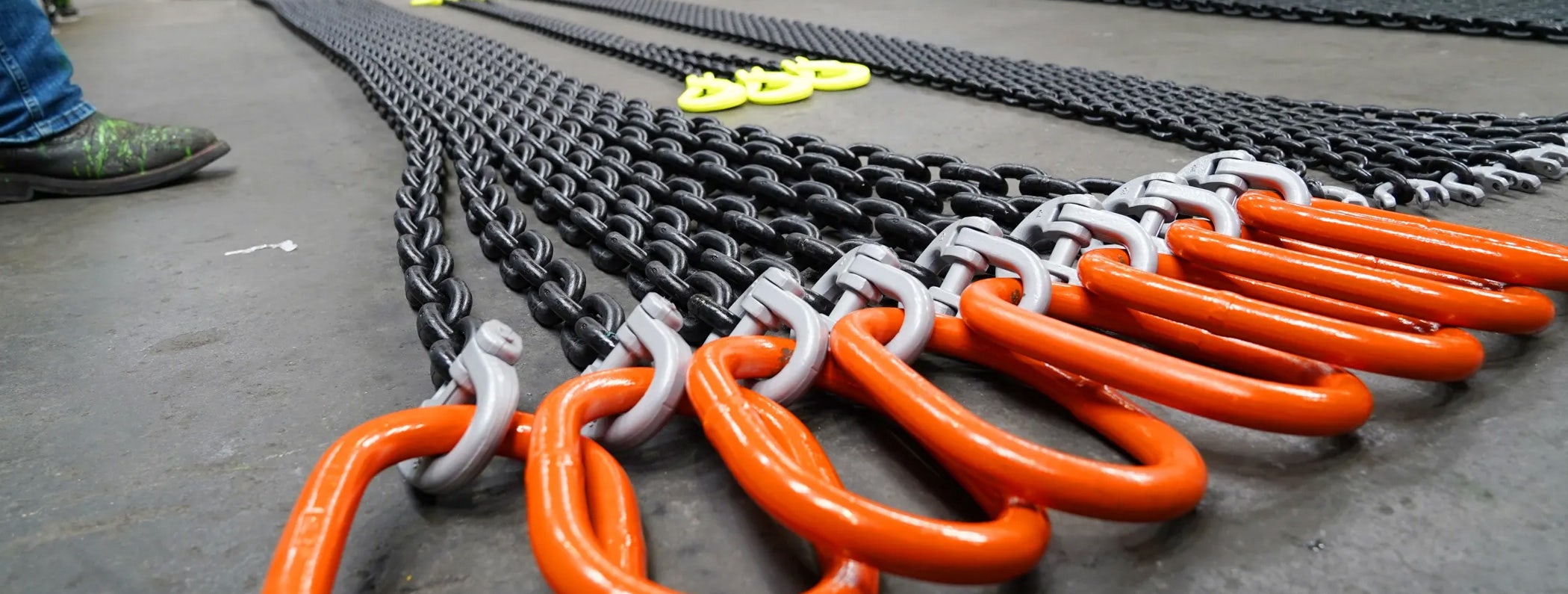
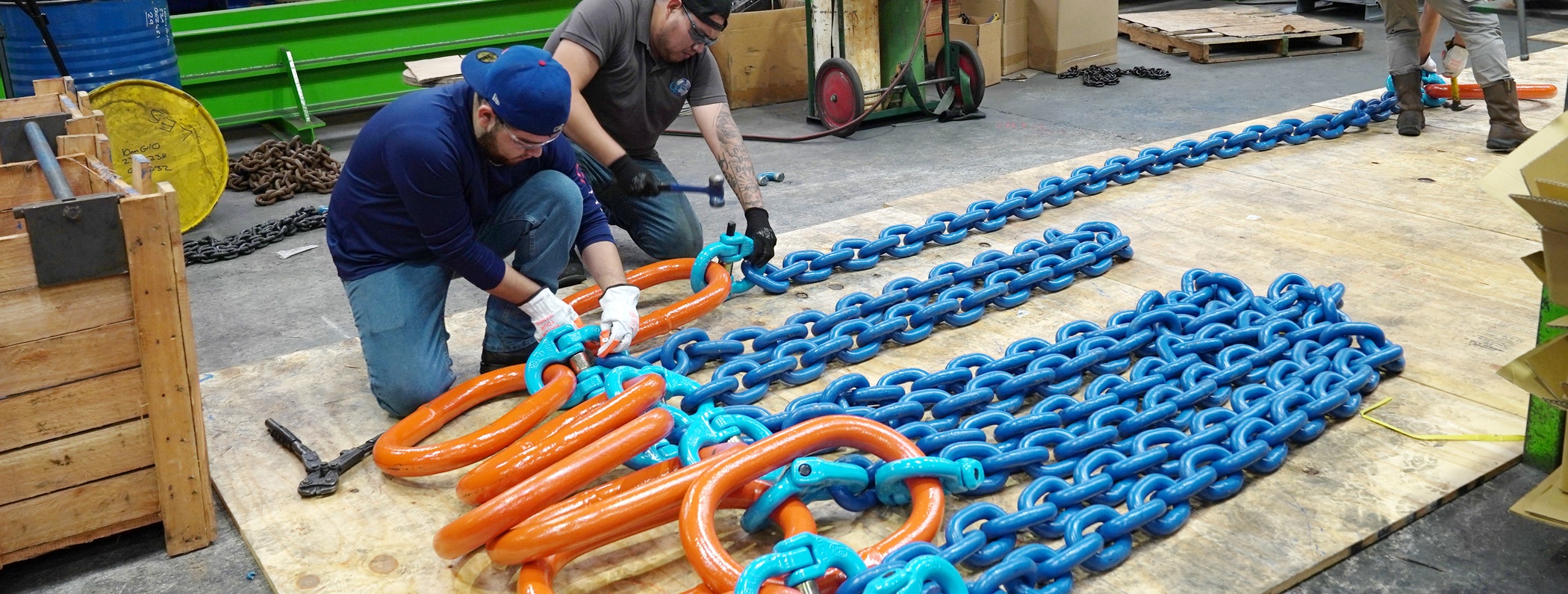
ASME B30.9 is an American National Standard (ANSI) that provides safety guidelines for slings in load-handling applications. The standard covers the fabrication, attachment, use, inspection, testing, and maintenance of slings made from alloy steel chain, wire rope, metal mesh, synthetic fiber rope, synthetic webbing, and polyester fiber yarns in protective cover(s).
ASME B30.9 is intended for manufacturers, owners, employers, users, and others concerned with the specification, buying, maintenance, training, and safe use of slings and hooks with B30 equipment, plus all potential governing entities.
Who is Supposed to Follow ASME B30.9?
ASME B30.9 is a voluntary standard, but it is widely adopted by industry and government agencies. Anyone who works with slings should be familiar with the standard and follow its guidelines to ensure the safe use of slings.
Why Should You Care About ASME B30.9?
Slings are used to lift and move heavy loads. If a sling is not used properly, it can fail, leading to serious injuries or death. By following the guidelines in ASME B30.9, you can help to ensure the safe use of slings and prevent accidents.
How Can Holloway Assist You?
Holloway is a leading provider of slings and other load-handling equipment. We can assist you with any of your sling needs, including:
- Selecting the right sling for your application
- Providing training on the safe use of slings
- Testing and inspecting slings to ensure they are in good condition
- Repairing or replacing damaged slings
We are committed to providing our customers with the safest and most reliable load-handling solutions. Please get in touch with us today to learn how we can help you comply with ASME B30.9 and keep your workers safe.
Here are some additional tips for using slings safely:
- Please always look over slings before use for signs of wear, damage, or corrosion.
- Never use a sling that is damaged or has exceeded its rated capacity.
- Use the correct sling for the load and application.
- Please don't overload a sling.
- Attach slings to the load safely and securely.
- Use slings in a safe environment.
- Please make sure to train your employees on the safe use of slings.
- By following these tips, you can help ensure slings' safe use and prevent accidents.
-

 Holloway Chain Sling | 4-Leg (Grade 100) | 3'
3-Foot Holloway Brand 4-Legs Chain Slings are manufactured in Houston, Texas USA using the highest quality components available. Go factory-direct! Our Grade 100 Chain Slings are protected with a tough black coating for superior rust protection and performance. They are certified to meet or exceed industry standards for overhead lifting operations and are proof-tested to twice their Working Load Limit (WLL) at our testing facility. Grade 100 components can lift up to 25% more than Grade 80 — use a smaller chain diameter to meet the same WLL. Each sling is guaranteed to conform to ASME standards and comes with a metal tag including mill certificate, proof test, conformance certifications, and MTR information. When you want the best quality and value, no one beats Holloway!
Fast shipping: in-stock slings ordered before 10am Central are usually shipped the same day.
Learn More -

 Crosby G-2130 Bolt Type Anchor Shackle - 3/16" - 1019464The 3/16" Crosby G2130 shackle is designed for heavy-duty work with permanent or long-term applications. The product's construction is corrosion-resistant and meant to accommodate pulling from all angles. Learn More$15.66
 -

 Endless Polyester Round Lifting Sling | HHERS1 | Purple - 2,600 lbs WLLThis round lifting sling offers safe and efficient lifting capabilities, crucial for various industries where heavy loads need to be lifted securely. Its durability and versatility make it an essential tool for makesure workplace safety and optimizing lifting operations. Learn MoreAs low as $8.50 was $9.24
 -

 Holloway Heavy Duty Eye & Eye Flat Web Sling | 1 Ply | NylonThe Holloway Heavy Duty Eye & Eye Flat Web Sling is designed to provide a secure and reliable attachment to lifting equipment. The reinforced eye loops on both ends make sure safety during lifting operations, making it a dependable choice for heavy-duty lifting needs Learn MoreAs low as $9.06 was $10.30
 -

 HHIppo Link Soft Shackle 3/8" x 10" WLL: 8,700 Lbs. | MBS: 43,500 Lbs. | HHI GreenThe HHIppo Link Soft Shackle 3/8" x 10" by Holloway provides a lightweight, non-metal solution for secure rigging in rugged environments. Supporting up to 8,700 Lbs., it’s a reliable choice for off-road recovery, towing, and industrial lifting. Available in HHI Green, this shackle is designed for flexibility and corrosion resistance in challenging applications. Learn More$68.00