Spreader Bars and Lifting Beams- Holloway's Detailed Analysis

When lifting heavy loads, it is important to use the right lifting equipment. The wrong equipment can lead to accidents and injuries. Two common types of lifting equipment are spreader bars and lifting beams.
What are Spreader Bars and Lifting Beams?
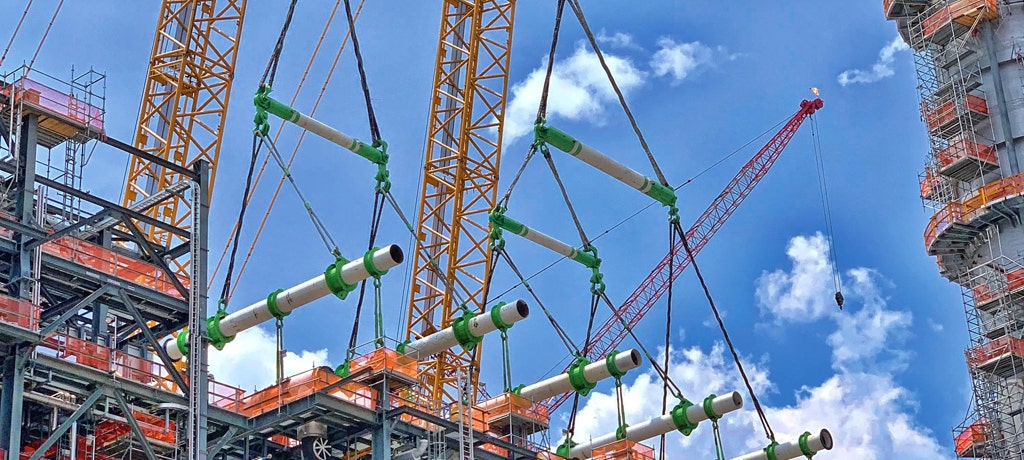
- Spreader bars are simple devices that distribute the weight of a load evenly over two or more points. They are often used to lift heavy loads that are not evenly distributed, such as beams or pipes.
- Lifting beams are more complex devices that can lift heavier loads than spreader bars. They are often used to lift loads over a long distance or to lift loads that are not evenly distributed.
When to Use a Spreader Bar
Spreader bars are ideal for lifting heavy loads that are not evenly distributed. They distribute the weight of the load over a wider area, which reduces the stress on the load and the lifting equipment. Spreader bars can also prevent a load from tipping or swaying and lift a load from a narrow space.
When to Use a Lifting Beam
Lifting beams are capable of lifting heavier loads than spreader bars. They can also be used to lift loads over a long distance. However, they are less effective than spreader bars for lifting loads that are not evenly distributed.
Choosing the Right Lifting Device
The best way to choose between a spreader bar and a lifting beam is to consider the specific needs of the lifting application. A spreader bar is the best option if you are lifting a heavy load that is not evenly distributed. A lifting beam is the best option if you are lifting a very heavy load or a load over a long distance.
Here are some additional tips for choosing a suitable lifting device:
- Consider the weight of the load.
- Consider the size of the load.
- Consider the distance the load needs to be lifted.
- Consider the shape of the load.
- Consider the environment in which the load will be lifted.
Safety First
When lifting heavy loads, it is essential always to follow safety procedures. These procedures include:
- Using the right lifting equipment for the job.
- Using the equipment properly.
- Having a qualified person in charge of the lift.
- Communicating with others involved in the lift.
- Being aware of your surroundings.
By following these safety procedures, you can help to prevent accidents and injuries.
I hope this helps!
-

 Holloway Chain Sling | 1-Leg (Grade 100) | 3'
3-Foot Holloway Brand 1-Leg Chain Slings are manufactured in Houston, Texas USA using the highest quality components available. Go factory-direct! Our Grade 100 Chain Slings are protected with a tough black coating for superior rust protection and performance. They are certified to meet or exceed industry standards for overhead lifting operations and are proof-tested to twice their Working Load Limit (WLL) at our testing facility. Grade 100 components can lift up to 25% more than Grade 80 — use a smaller chain diameter to meet the same WLL. Each sling is guaranteed to conform to ASME standards and comes with a metal tag including mill certificate, proof test, conformance certifications, and MTR information. When you want the best quality and value, no one beats Holloway!
Fast shipping: in-stock slings ordered before 10am Central are usually shipped the same day.
Learn More -

 Holloway Chain Sling | 2-Leg (Grade 100) | 6'
6-Foot Holloway Brand 2-Legs Chain Slings are manufactured in Houston, Texas USA using the highest quality components available. Go factory-direct! Our Grade 100 Chain Slings are protected with a tough black coating for superior rust protection and performance. They are certified to meet or exceed industry standards for overhead lifting operations and are proof-tested to twice their Working Load Limit (WLL) at our testing facility. Grade 100 components can lift up to 25% more than Grade 80 — use a smaller chain diameter to meet the same WLL. Each sling is guaranteed to conform to ASME standards and comes with a metal tag including mill certificate, proof test, conformance certifications, and MTR information. When you want the best quality and value, no one beats Holloway!
Fast shipping: in-stock slings ordered before 10am Central are usually shipped the same day.
Learn More -

 Endless Polyester Round Lifting Sling | HHERS1 | Purple - 2,600 lbs WLLThis round lifting sling offers safe and efficient lifting capabilities, crucial for various industries where heavy loads need to be lifted securely. Its durability and versatility make it an essential tool for makesure workplace safety and optimizing lifting operations. Learn MoreAs low as $8.50 was $9.24
 -

 Holloway Heavy Duty Eye & Eye Flat Web Sling | 1 Ply | NylonThe Holloway Heavy Duty Eye & Eye Flat Web Sling is designed to provide a secure and reliable attachment to lifting equipment. The reinforced eye loops on both ends make sure safety during lifting operations, making it a dependable choice for heavy-duty lifting needs Learn MoreAs low as $9.06 was $10.30
 -

 Crosby G-2130 Bolt Type Anchor Shackle - 3/16" - 1019464The 3/16" Crosby G2130 shackle is designed for heavy-duty work with permanent or long-term applications. The product's construction is corrosion-resistant and meant to accommodate pulling from all angles. Learn More$15.66