What is Sling Protection? How to Maintain Your Lifting Slings for a Long Time

Be it shipping yards or construction sites, rigging and lifting heavy loads wouldn’t be possible without slings. They are a simple and cost-effective tool to ensure safe and efficient lifting, even for the heaviest and most oddly shaped loads. As a result, the industrial lifting slings undergo regular wear and tear, making it necessary to protect and care for them as much as possible.
The lack of sling protection means you will be throwing out damaged slings constantly. Synthetic slings are probably the cheapest of all industrial lifting devices. But, wire rope and chain slings are very expensive. In other words, a high sling turnover can cost you a pretty penny. Besides, your productivity will take a nosedive because replacing the chain and wire rope slings could take days, if not weeks.
If you want to provide the best lifting solutions, you have to pay attention to sling protection and maintenance.
Let’s understand how that works in detail.
What is Sling Protection?
In the rigging and lifting industry, sling protection is a collective term for all the measures taken to protect the slings from sharp edges, corners, and other potential damage. You can use different types of protective equipment such as corner guards, sleeves, reinforced eyes, and wear pads to protect the slings from sharp edges.
Usually made from wood, Kevlar, rubber, leather, and nylon, these devices come in all shapes and sizes. You can choose a protective gear depending on the types of slings, load, and lifting height or distance.
All types of slings require protection, even chain, and wire rope slings. But it is more prevalent when using synthetic slings like web and round slings. As they are made from Nylon or Polyester, these slings are more prone to cuts from sharp edges or corners.
However, sling protection goes well beyond just using protective equipment. It lays down guidelines for using lifting slings in the safest way possible to avoid accidents. It also covers the basics of maintenance and storage procedures to ensure prolonged use.
Slings usually require protection when:
- Used to lift oddly shaped loads with sharp edges and corners.
- Used to lift heavy loads with sharp edges.
- Used to lift loads in harsh weather or environment.
- Connecting the load to crane hook, shackle, hoist rings, eye bolts, and master link.
Downsides Of Not Protecting Your Lifting Slings
Sling protection is a must. Without it, you would be facing several problems, including:
- Workplace Accidents, Injuries, And Deaths: Imagine what will happen if a heavy load gets dropped because of a damaged sling. It can seriously injure or even kill people standing underneath or near it.
- Damage To The Load Itself: If slings break down when lifting a heavy and expensive load, you could end up with damages worth thousands of dollars. Also, wire rope or chain slings often put unbearable pressure on the loads. Without proper protection, delicate loads may get damaged.
- Higher Sling Costs: You will have to buy new lifting slings more frequently than ever. It can run your budget dry pretty fast.
How Do I Protect My Slings?
In order to provide optimal lifting solutions, you must protect your slings when in use and kept in storage. Here are a few things you should keep in mind.
A. When Using Your Lifting Slings:
Avoid Exposure To High Temperature: All lifting slings need protection from extreme temperatures. Even alloy chain slings are susceptible to damage caused by extreme temperature. Although these won’t melt or burn like synthetic slings, they will become soft and brittle over time.
Keep An Eye Out for Chemical Exposure: Many industries have to lift and rig loads in harsh chemical environments. For example, in the manufacturing industry, metal parts require a protective coating. In this process, these parts often get dipped in a mixture of chemicals. What will happen to your lifting slings when they get exposed to the chemicals? You need to consider the potential risks and use suitable protective equipment.
Protect Lifting Slings from UV Light: Slings, particularly synthetic slings, are more susceptible to UV light damage. So, you have to store them in a cool and dry place that doesn’t receive direct sunlight. If you see any discoloration, discard the synthetic slings immediately. It is a sign of UV light exposure and weakened fiber strands.
Use Sling Protection When Necessary: Whenever you are rigging and lifting loads with sharp edges and corners, make sure to use protective equipment such as sling wear pads. Even if the slings come with an edge guard coating, it’s still better to use suitable cut protection.
Never Cross The Working Load Limits: All lifting slings, made from synthetic fibers or metal alloys, come with a working load limit or WLL. Crossing the WLL will not only damage the slings but also result in accidents. Always make sure to check the WLL stated on the slings. Don’t use them if this information is not visible.
B. When Keeping Your Lifting Slings In Storage:
Keep The Slings Clean And Dry: Make sure to clean the lifting slings after each use. Continuous exposure to moisture, dirt, and dust can damage the slings. However, don’t use solvents or de-greasing solutions to clean them up. These chemicals will reduce the strength of the synthetic slings.
You also need to conduct a thorough visual inspection before each use. If you see any damage such as cuts, discoloration, kinks, doglegs, and scratches, discard the industrial lifting slings immediately. Stick to the guidelines given in the ASME B30.9 to keep your slings in excellent working condition.
Store Slings Properly: Always store the lifting slings off the ground, preferably hanging on the wall. Also, keep them in a cool, dry, and dark place. It will protect slings from moisture, dirt, UV light, and dust. But most importantly, it will protect your staff from tripping over. Never store lifting slings in a chemically active environment.
In Conclusion
If you use industrial lifting slings regularly, you must keep them in top shape. It will ensure longevity and safety. Replacing a damaged sling is an expensive and demanding task. Instead, you can save time, money, and effort by ensuring proper sling protection and care. Hopefully, these tips will help.
If you are looking for industrial lifting devices, check out our online store or give us a call. HHI sells and rents different types of rigging and lifting hardware at attractive rates. Call us today to know more.
Shop Online Rigging & Lifting Slings-

 Holloway Chain Sling | 4-Leg (Grade 100) | 3'
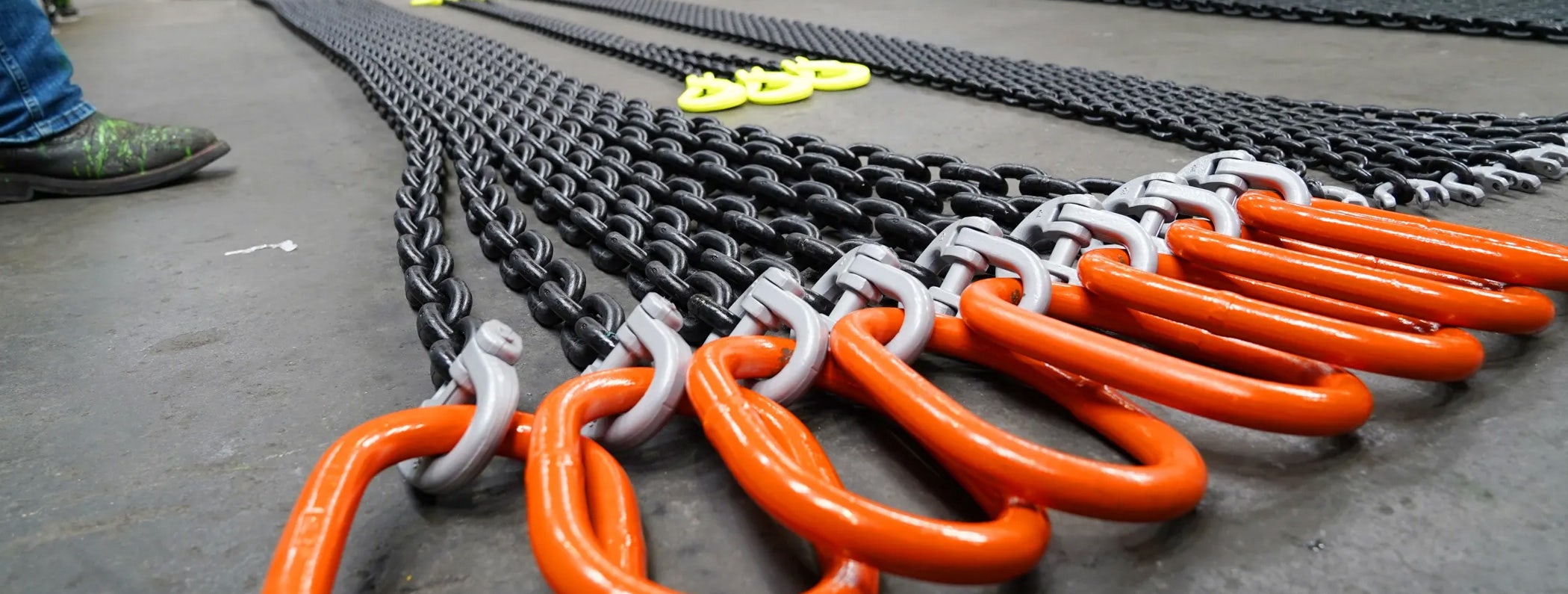
3-Foot Holloway Brand 4-Legs Chain Slings are manufactured in Houston, Texas USA using the highest quality components available. Go factory-direct! Our Grade 100 Chain Slings are protected with a tough black coating for superior rust protection and performance. They are certified to meet or exceed industry standards for overhead lifting operations and are proof-tested to twice their Working Load Limit (WLL) at our testing facility. Grade 100 components can lift up to 25% more than Grade 80 — use a smaller chain diameter to meet the same WLL. Each sling is guaranteed to conform to ASME standards and comes with a metal tag including mill certificate, proof test, conformance certifications, and MTR information. When you want the best quality and value, no one beats Holloway!
Fast shipping: in-stock slings ordered before 10am Central are usually shipped the same day.
Learn More -

 Endless Polyester Round Lifting Sling | HHERS2 | Green - 5,300 lbs WLLLift confidently with our green polyester round lifting sling. Versatile and durable, it guarantees safe lifting in various applications. Learn MoreAs low as $9.62 was $10.46
 -

 Endless Polyester Round Lifting Sling | HHERS4 | Tan - 10,600 lbs WLLTackle tough lifting jobs with our tan polyester round lifting sling. Its robust construction promises safety and efficiency in lifting tasks. Learn MoreAs low as $14.78 was $16.07
 -

 Holloway Heavy Duty Eye & Eye Flat Web Sling | 1 Ply | NylonThe Holloway Heavy Duty Eye & Eye Flat Web Sling is designed to provide a secure and reliable attachment to lifting equipment. The reinforced eye loops on both ends make sure safety during lifting operations, making it a dependable choice for heavy-duty lifting needs Learn MoreAs low as $9.06 was $10.30
 -

 Holloway Heavy Duty Eye & Eye Flat Web Sling | 2 Ply | NylonSlings are available in nylon or polyester webbing. Minimum 5:1 design factor. Do not exceed rated capacities. The ratings must be reduced when lifting at angles of less than 90 degrees with the horizontal. Learn MoreAs low as $11.29 was $12.83