How to Safely Use Round Slings

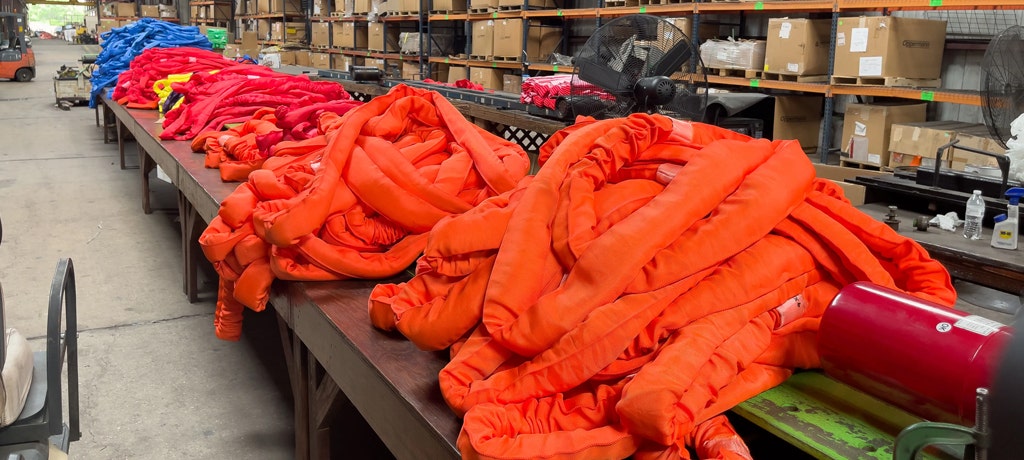
Round slings are a versatile and reliable lifting tool used in various applications. However, it is essential to use them safely to avoid accidents. Here are some safety tips for using round slings:
- Inspect the sling before each use:
- Load the sling properly:
- Use the right size sling:
- Avoid sharp edges:
- Tie the sling properly:
- Use a tag line:
- Be aware of your surroundings:
- Use the correct lifting techniques:
- Get proper training:
Before using a round sling, it is important to inspect it for any signs of damage visually. This includes looking for cuts, fraying, burns, or other damage that could weaken the sling. If you see any damage, do not use the sling.
The load should be evenly distributed across the sling. Do not overload the sling. Overloading the sling can cause it to break, which could lead to an accident.
The sling should be large enough to fit around the load without being too tight. A tight sling can damage the load or the sling itself.
Do not use a round sling around sharp edges. This can damage the sling and cause an accident. If you must use a round sling around sharp edges, use a protective sleeve to prevent the sling from being cut.
The sling should be tied to prevent it from coming undone. There are many different ways to tie a round sling. The best way to tie a round sling depends on the application.
A tag line is a rope that is used to control the load. This can help prevent accidents. The tag line should be long enough to reach the load from a safe distance.
Make sure that there are no obstacles in the way of the load. If the load is dropped, it could cause an accident.
There are specific lifting techniques that should be used when using round slings. These techniques can help prevent accidents. For example, you should always lift with your legs, not your back.
Getting proper training on how to use round slings safely is important. This training can help you avoid accidents.
Here are some additional safety tips to keep in mind when using round slings:
- Round slings should not be used to lift people.
- Round slings should not be used to lift loads too heavy or too large.
- Round slings should not be used in environments exposed to extreme temperatures or chemicals.
- Round slings should be inspected regularly for damage and replaced if they are damaged.
Following these safety tips can help prevent accidents when using round slings.
Choosing the suitable round slings for your needs is essential for safety and efficiency. By considering the factors above, you can be sure to choose the right round slings for your application.
Are you ready to buy round slings? You can do it through our online store at Holloway or by contacting a sales representative at +1 888 496 4700. We have a wide variety of round slings available, and our team of experts can help you choose the right ones for your needs.
-

 Endless Polyester Round Lifting Sling | HHERS1 | Purple - 2,600 lbs WLLThis round lifting sling offers safe and efficient lifting capabilities, crucial for various industries where heavy loads need to be lifted securely. Its durability and versatility make it an essential tool for makesure workplace safety and optimizing lifting operations. Learn MoreAs low as $8.50 was $9.24
 -

 Endless Polyester Round Lifting Sling | HHERS2 | Green - 5,300 lbs WLLLift confidently with our green polyester round lifting sling. Versatile and durable, it guarantees safe lifting in various applications. Learn MoreAs low as $9.62 was $10.46
 -

 Endless Polyester Round Lifting Sling | HHERS3 | Yellow - 8,400 lbs WLLHandle heavy loads with ease using our yellow polyester round lifting sling. Its endless design offers reliability and flexibility for diverse lifting needs. Learn MoreAs low as $13.80 was $15.00
 -

 Endless Polyester Round Lifting Sling | HHERS4 | Tan - 10,600 lbs WLLTackle tough lifting jobs with our tan polyester round lifting sling. Its robust construction promises safety and efficiency in lifting tasks. Learn MoreAs low as $14.78 was $16.07
 -

 Endless Polyester Round Lifting Sling | HHERS5 | Red - 13,200 lbs WLLLift with ease using our red polyester round lifting sling. Its endless design offers reliability and ease of use in demanding environments. Learn MoreAs low as $19.09 was $20.75