How to Choose the Right Round Slings for Your Needs

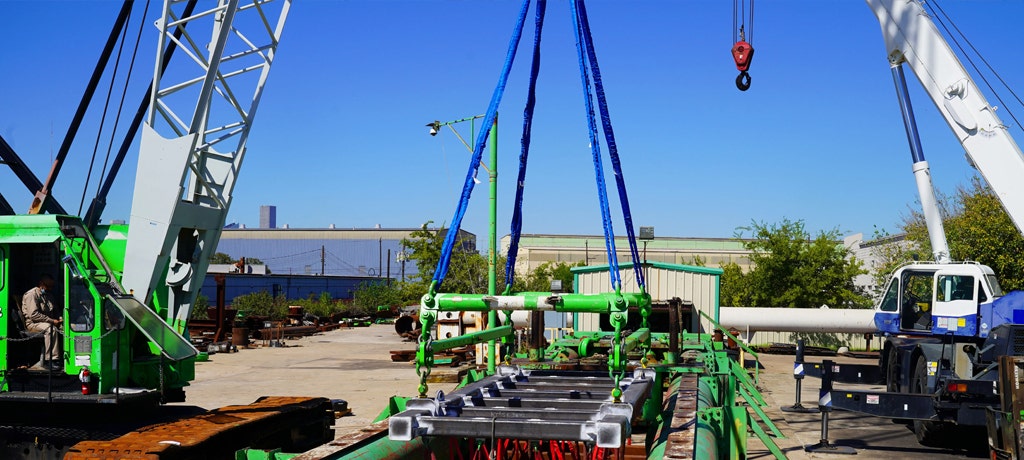
Round slings are a versatile and reliable lifting tool used in various applications. They are made from a single continuous loop of material, often from synthetic fibers. Round slings are available in various sizes and strengths so that you can find the perfect one for your needs. They are also relatively inexpensive, making them a cost-effective lifting solution.
When choosing round slings, there are a few factors you need to consider:
- The weight of the load: The round sling must be strong enough to support the weight of the load. The sling's working load limit (WLL) should be at least 1.5 times the weight of the load.
- Source:
Occupational Safety and Health Administration (OSHA). "29 CFR 1910.184 - Slings." OSHA.gov, 2023
Wire Rope Technical Institute (WSTDA). "Round Slings." WSTDA.org, 2023 - The shape of the load: The round sling must conform to the shape of the load. If the load is irregular, you may need to use a sling with a larger diameter.
- The environment: The round sling must withstand the environmental conditions in which it will be used. If the sling will be exposed to extreme temperatures or chemicals, you need to choose a sling made from a material resistant to those conditions.
Factual Information
- Round slings are rated by their working load limit (WLL), the maximum weight the sling can safely lift.
- Round slings should be inspected regularly for wear and tear. Any sling that is damaged should be replaced immediately.
- Round slings should be stored in a cool, dry place when they are not in use.
Guidelines from the WSTDA website
The WSTDA website provides the following guidelines for choosing round slings:
- Choose a sling made from a material that is strong enough to support the weight of the load.
- Choose a sling that is the right size for the load.
- Choose a sling rated for the environment in which it will be used.
- Inspect the sling regularly for wear and tear.
- Replace the sling if it is damaged.
Choosing the suitable round slings for your needs is essential for safety and efficiency. By considering the factors above, you can be sure to choose the right round slings for your application.
Are you ready to buy round slings? You can do it through our online store at Holloway or by contacting a sales representative at +1 888 496 4700. We have a wide variety of round slings available, and our team of experts can help you choose the right ones for your needs.
-

 Endless Polyester Round Lifting Sling | HHERS2 | Green - 5,300 lbs WLLLift confidently with our green polyester round lifting sling. Versatile and durable, it guarantees safe lifting in various applications. Learn MoreAs low as $9.62 was $10.46
 -

 Endless Polyester Round Lifting Sling | HHERS4 | Tan - 10,600 lbs WLLTackle tough lifting jobs with our tan polyester round lifting sling. Its robust construction promises safety and efficiency in lifting tasks. Learn MoreAs low as $14.78 was $16.07
 -

 Endless Polyester Round Lifting Sling | HHERS7 | Blue - 21,200 lbs WLLStreamline heavy lifting operations with our blue polyester round lifting sling. Its endless design provides reliability and flexibility for challenging operations Learn MoreAs low as $25.71 was $27.95
 -

 Endless Polyester Round Lifting Sling | HHERS12 | Green/Black - 66,000 lbs WLLOptimize heavy-duty lifting tasks with our robust green/black polyester round lifting sling. It offers reliable support and flexibility for challenging work scenarios, making it an essential tool for your lifting needs. Learn MoreAs low as $77.66 was $84.41
 -

 Endless Polyester Round Lifting Sling | HHERS1 | Purple - 2,600 lbs WLL | 3'This 3-foot Endless Polyester Round Lifting Sling is built to handle up to 2,600 lbs, offering flexibility and lightweight convenience for demanding lifting tasks. Made from durable polyester, it’s resistant to moisture and mildew, making it suitable for a range of environments. Ideal for jobs requiring a versatile and easy-to-handle sling. Learn Morewas $9.24 Special Price $8.50