My Cart
You have no items in your shopping cart.

Wire rope is one of the most crucial equipments used in the industries today. As the name suggests, wire rope comprises of various wire strands compiled together to make a strong and durable wire rope. The early days’ wire rope was made up of rotten iron. However, as the expected level of quality standards raised, use of steel to make wire ropes became more prominent. Steel is more durable than iron, as it is comparatively not much affected by water and other materials.
The main feature of a wire rope is that it is made up of many strands of steel wires. This makes it stronger and more durable in any wear and tear conditions. Even if one strand of wire fails, the others strongly work towards holding the object as desired. Along with the wire ropes come the wire rope clamps. These are also popularly known as wire rope clips. It has a U-shaped bolt. This U-shaped bolt is used to join the loose end loop with the wire rope. It also has a forged saddle which is fixed with the help of two nuts on to the U-shaped bolt.
Since wire ropes are among the most critical equipments used today, it is important that they are bought through a diligent selection process. Here are some major considerations to have while selecting the right kind of wire rope:
– Using wire ropes in areas with high salt water or environment can cause early depreciation of the same.
– When wire ropes are being exposed to any kind of destructive chemicals, the service life reduces due to high wear and tear.


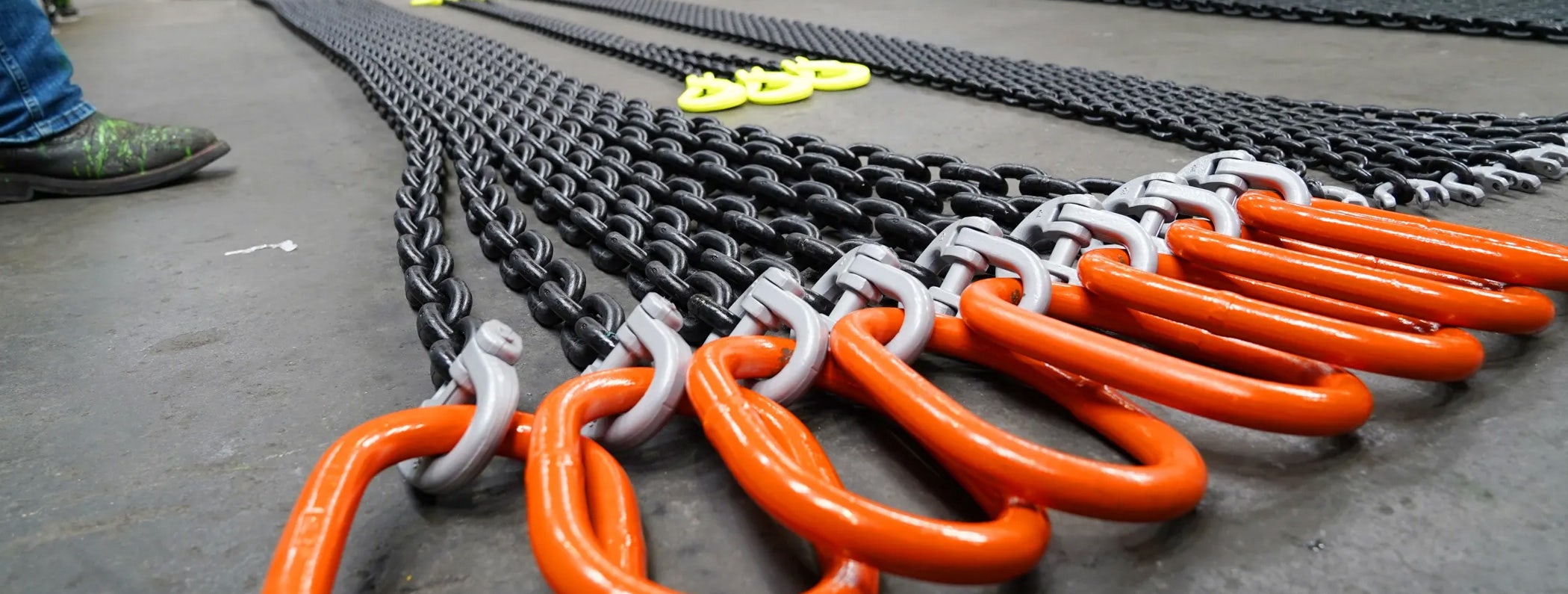
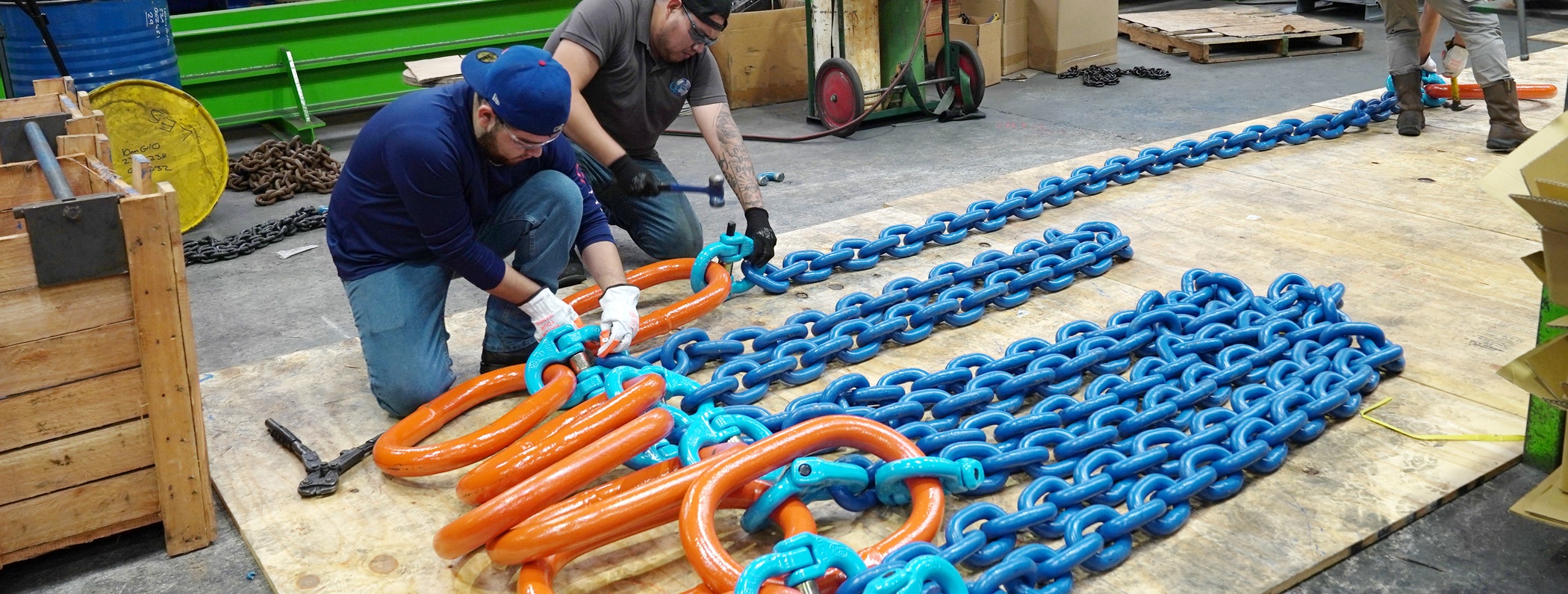
3-Foot Holloway Brand 4-Legs Chain Slings are manufactured in Houston, Texas USA using the highest quality components available. Go factory-direct! Our Grade 100 Chain Slings are protected with a tough black coating for superior rust protection and performance. They are certified to meet or exceed industry standards for overhead lifting operations and are proof-tested to twice their Working Load Limit (WLL) at our testing facility. Grade 100 components can lift up to 25% more than Grade 80 — use a smaller chain diameter to meet the same WLL. Each sling is guaranteed to conform to ASME standards and comes with a metal tag including mill certificate, proof test, conformance certifications, and MTR information. When you want the best quality and value, no one beats Holloway!
Fast shipping: in-stock slings ordered before 10am Central are usually shipped the same day.
Learn More