My Cart
0
You have no items in your shopping cart.

Rigging is an important activity and because it involves the lifting and moving of heavy loads from one location to another, it must be conducted keeping in mind the safety of people working in and around such equipment.
There are plenty of factors that need to be considered to ensure t all kinds of rigging activity is conducted harmlessly and without risking the lives of individuals or causing damage to the surrounding environment.
Let’s take a look at 5 tips that will improve the safety of the rigging equipment:
It’s not just the weight of the load that will determine the kind of rigging equipment to be used and the way it must be used. The dimensions of the load and also the center of gravity must be taken into consideration to pick the right kind of equipment that can handle the load in a hassle free and very safe manner.
What are the hazards, if any, that you will face if the load that the rigging equipment is lifting were to drop or collide with some other object along the route? The answer to this question will help you plan for any eventuality and also make sure that you already have a solution in place to avoid such mishaps.
The load must be rigged, using the best rigging practices. So identify those practices that can help you rig your load the right way. In the first point, we had talked about the importance of the dimensions, weight and center of gravity of a particular load; it is these characteristics that determine the kind of rigging practices that must be followed.
Sometimes, in all our efforts to pick the right rigging equipment like rope slings, wire hooks, crane, lifting fixture, etc. we tend to forget giving importance to the point to which the rigging gear is attached to. Even these points are subject to tremendous external pressure and therefore you must make doubly sure that these points can withstand such pressure.
Whatever the decisions that you take, make sure that you know what you are doing. Get all the information you can about a particular aspect and only then decide to put in place a series of measures that will improve the safety of the rigging equipment. The idea is to take informed decisions to make sure you are doing the right thing.
Make sure that a supervisor and/or a qualified person is in charge of maintaining the safety of the lifting/rigging equipment. Don’t let an amateur handle this particular aspect as it might lead to unnecessary problems. Also, make sure that you keep rigging handbooks handy to make sure nobody forgets to implement the proper rigging techniques that must be used for lifting operations. Something else that you mustn’t forget is choosing the right rigging equipment that has the right kind of load bearing capacity. If you choose the perfect equipment for your lifting rigging needs that is half the battle won as far as safety of the equipment is concerned.
Shop Online

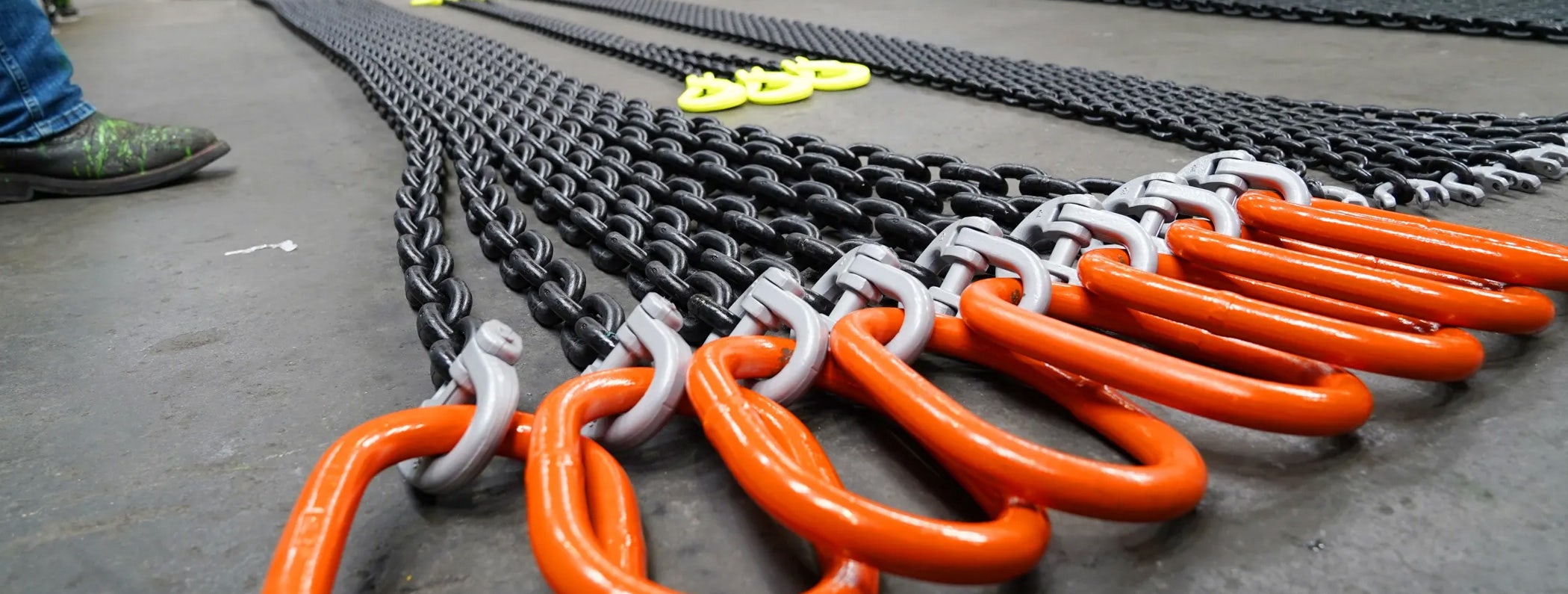
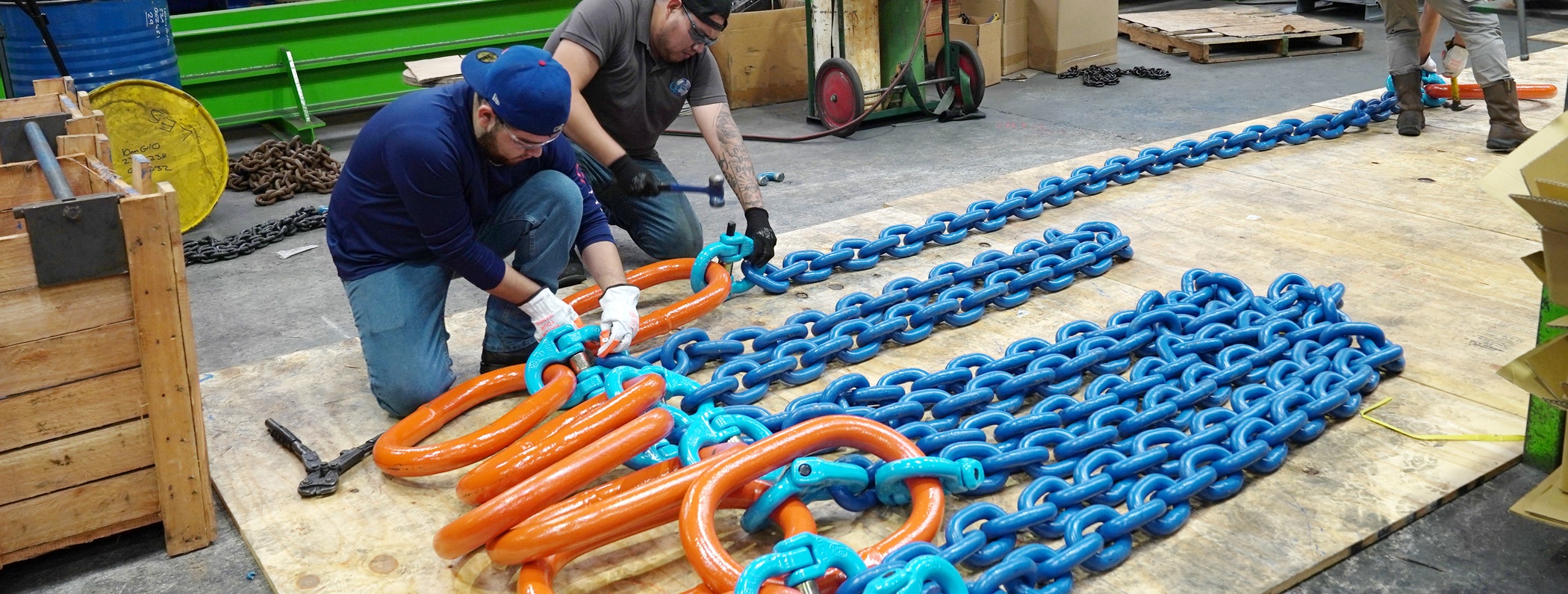
3-Foot Holloway Brand 4-Legs Chain Slings are manufactured in Houston, Texas USA using the highest quality components available. Go factory-direct! Our Grade 100 Chain Slings are protected with a tough black coating for superior rust protection and performance. They are certified to meet or exceed industry standards for overhead lifting operations and are proof-tested to twice their Working Load Limit (WLL) at our testing facility. Grade 100 components can lift up to 25% more than Grade 80 — use a smaller chain diameter to meet the same WLL. Each sling is guaranteed to conform to ASME standards and comes with a metal tag including mill certificate, proof test, conformance certifications, and MTR information. When you want the best quality and value, no one beats Holloway!
Fast shipping: in-stock slings ordered before 10am Central are usually shipped the same day.
Learn More